Synthetic fiber has a reputation problem, and most of it is unfair. In fifteen years of building wigs for stage productions, I learned quickly that a leading lady might need three identical looks in one week and there would never be budget for three human-hair units. Synthetic fiber solved that problem so reliably that I still keep a shelf of it in my home studio, right next to the ventilation needles and the lace.
That said, synthetic wigs do fail. They fail in specific, predictable ways, and almost every complaint you have read online traces back to a fiber choice, a heat mistake, or a care routine borrowed from human hair. This guide walks through what synthetic fiber actually is, where it genuinely outperforms human hair, where it does not, and how to keep a unit wearable for months instead of weeks.
What 'Synthetic' Actually Means
Synthetic wig fiber is extruded plastic formed into filaments, then crimped or textured to mimic the cuticle behavior of human hair. It has no cuticle, which is the single most important fact in this entire article. Human hair has overlapping scales that can be lifted, smoothed, and chemically altered. Synthetic fiber is a smooth rod. It cannot be repaired once damaged, only replaced.
The overwhelming majority of wigs on the market use modacrylic fiber. Kanekalon is a well-known modacrylic brand; Toyokalon is a softer, more pliable cousin often used in longer lengths. Both resist heat poorly. A separate category — usually labeled heat-friendly, heat-defiant, or heat-resistant, and sometimes sold under names like Futura — uses a different polymer that tolerates moderate styling temperatures on a low setting. Do not assume a wig is heat-friendly. Assume it is not until the label says otherwise.
The Real Advantages of Synthetic Fiber
The case for synthetic is stronger than most people expect, particularly once you stop comparing it to a two-thousand-dollar human-hair unit and start comparing it to what it actually is: a discrete, replaceable piece of costume.
- Price. A good synthetic unit costs a fraction of a comparable human-hair wig, which means you can own several colors and lengths instead of one compromise.
- Color stability. Synthetic fiber is dyed at the extrusion stage. The color does not oxidize, fade in sunlight, or shift the way human hair color does. A blonde stays blonde.
- Style memory. The fiber is set with heat at the factory and holds that shape. Body waves, curls, and blunt cuts survive washing and humidity far better than human hair.
- Humidity resistance. This is the underrated one. Human hair frizzes in August. Modacrylic does not absorb atmospheric moisture, so a synthetic blowout stays a blowout in a rainstorm.
- Volume without weight. Synthetic fiber is lighter per strand, so a full-density unit does not drag on your scalp or flatten at the crown the way heavy human hair can.
- Ready to wear. Most synthetic wigs arrive styled. You can literally take one out of the box, shake it, adjust the straps, and walk out the door.
The Honest Disadvantages
Now the other side of the ledger. These are the failure modes I have watched happen on real heads, not theoretical drawbacks.
- Friction frizz. This is the number one complaint, and it is caused by the fiber rubbing against collars, seat backs, and shoulder bags. Friction roughens the filament surface and the ends begin to look dull and frayed. Synthetic fiber has no cuticle to smooth back down, so damage is cumulative.
- Shine. New modacrylic has a glossy, almost plastic reflection, especially under overhead lighting. It usually softens after two or three wears, but some units stay shiny for life.
- Limited heat. Standard synthetic fiber melts or crimps under a straightener. Once scorched, the strand is done. There is no repair.
- Lifespan. Expect roughly three to six months of regular wear from a decent unit, less with daily wear and constant friction. It is a consumable, not an investment.
- Recoloring limits. You can sometimes go darker with a fabric dye, but you cannot lift synthetic fiber. Bleaching, highlighting, and going lighter are off the table.
- Scalp realism. Fiber does not behave like hair at the parting. Without a lace front, a monofilament top, or a hand-tied crown, a synthetic wig reads as a wig from several feet away.
Heat-Friendly Fiber: Read the Label Before You Plug Anything In
Heat-friendly synthetic is the middle ground, and it is genuinely useful — but the marketing oversells it. The fiber tolerates low to moderate heat, typically well under the temperatures you would use on human hair, and manufacturer specs vary. Treat it as a fiber that will accept a gentle touch, not one that behaves like hair.
Test on a hidden section first: the nape or the underside of a curl near the ear tab. Start on the lowest setting, keep the tool moving, and never hold it in one spot. If the fiber smells sweet or chemical, you are already too hot — stop immediately. That smell is plastic decomposing, and it does not come back.
Cap Construction: Where Synthetic and Human Hair Diverge
This is the part most buying guides skip, and it is the part I care about most. Cap construction determines whether a synthetic wig looks convincing, and it matters more here than with human hair because you cannot retrofit a better parting onto a finished unit.
- Standard wefted or capless caps. Wefts sewn to open netting, with a fixed lace front or a simple closed parting. Affordable, breathable, and the densest-looking construction. Best for full styles with minimal exposed parting.
- Lace front. A sheer lace panel at the hairline that you can cut back and glue or tape down. This is what sells a synthetic wig as a hairline rather than a hat.
- Monofilament top. Each fiber is hand-ventilated into a fine mesh that disappears against the scalp. It creates a part that looks like skin, and it lets you change the parting direction. Worth the price increase on shorter styles where the crown is always visible.
- Hand-tied caps. Knots tied individually rather than sewn in rows. The result moves more naturally and lies flatter, but the fibers can shed more freely because each knot grips fewer strands.
- Ventilation density. Fiber count per square inch is the difference between a unit that looks full and one that looks like a doll. On synthetic, high density plus a smooth fiber can read as heavy — ask for medium density with a lace front rather than maximum density everywhere.
One practical note: synthetic fiber has no give. A human-hair wig will relax and forgive a tight cap after a week. A synthetic cap will not. Fit matters more here, so measure your circumference and adjust the straps before you judge comfort.
How to Wash a Synthetic Wig Without Ruining It
You do not need to wash a synthetic wig often — every eight to twelve wears is reasonable, or sooner if you have used heavy product. Over-washing is a common mistake and it accelerates fiber wear.
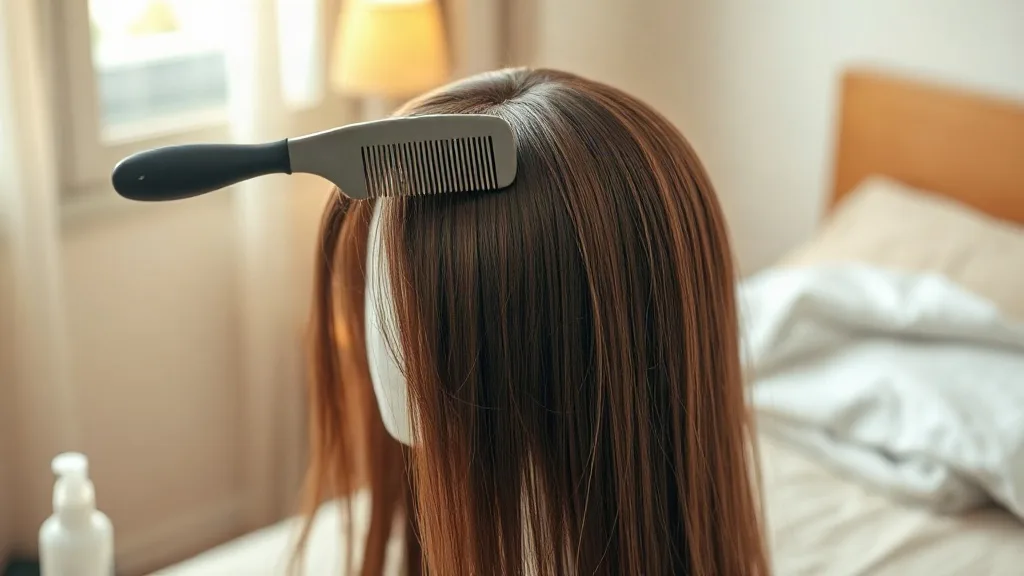
- Detangle dry first. Use a wide-tooth comb or your fingers, working from the ends up to the cap. Never comb a wet synthetic wig from the top down.
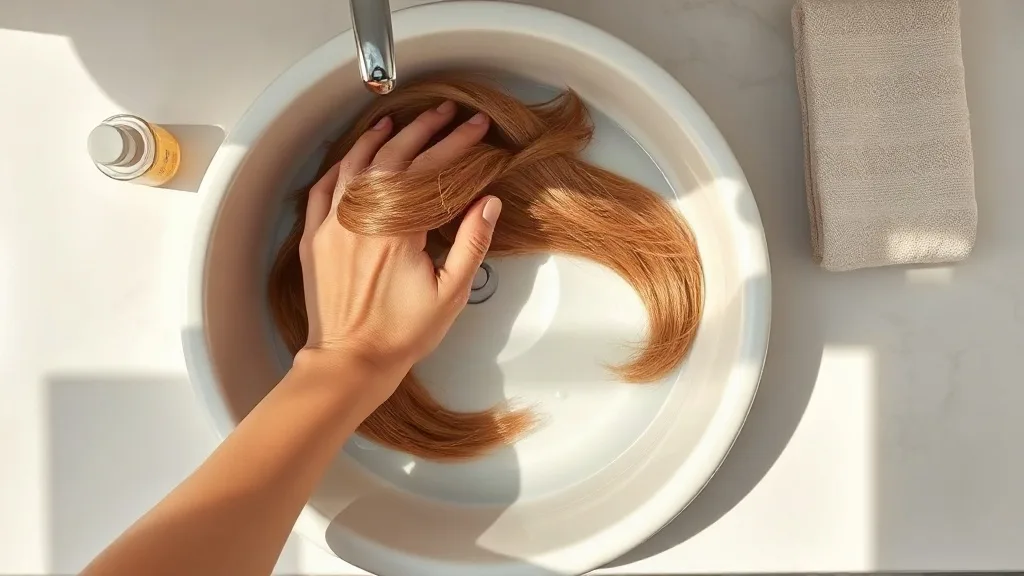
- Fill a basin with cool water. Lukewarm at the absolute most. Hot water can relax the factory-set style and will dull the fiber.
- Add a capful of wig shampoo or a gentle sulfate-free shampoo. Swish the wig gently. Do not scrub, wring, or bunch the fiber.
- Rinse in cool running water until it runs clear. Never comb while wet.
- Blot with a towel. Do not rub, do not twist, do not hang it up dripping.
- Air dry on a wig stand or a towel-covered block, away from direct heat and sunlight. Give it overnight.
Skip the fabric softener soak. It is a persistent folk remedy, and while it can temporarily smooth a rough fiber, it leaves a residue that attracts dust and can dull color over time. A silicone-based wig conditioning spray, used sparingly on the mid-lengths and ends, does the same job with fewer consequences.
Staying Ahead of Frizz
Frizz is a friction problem, so the fix is partly behavioral. Keep the wig off your collar when you can, avoid rough upholstery and shoulder straps, and rotate your units rather than wearing one every single day. A wig that gets a rest day lasts considerably longer.
For light frizz, a few drops of silicone serum smoothed through the ends will restore the slip. For heavy, velcro-like damage at the tips, trim them. A quarter inch off the ends of a long synthetic wig is invisible, and it buys you another month of wear. There is no product that will un-roughen a damaged filament, so cutting is not defeat — it is maintenance.
Storage, Rotation, and Knowing When to Let Go
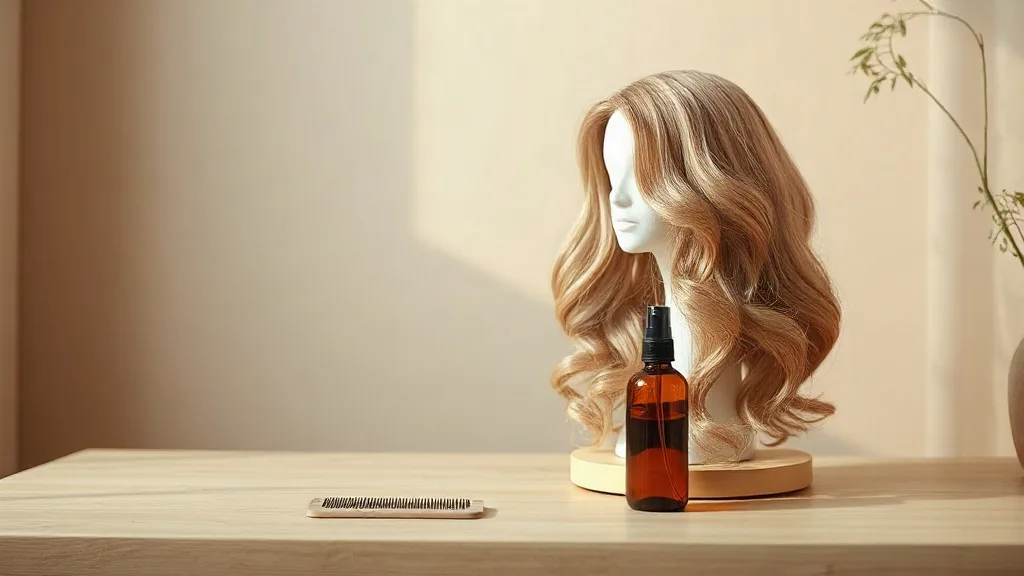
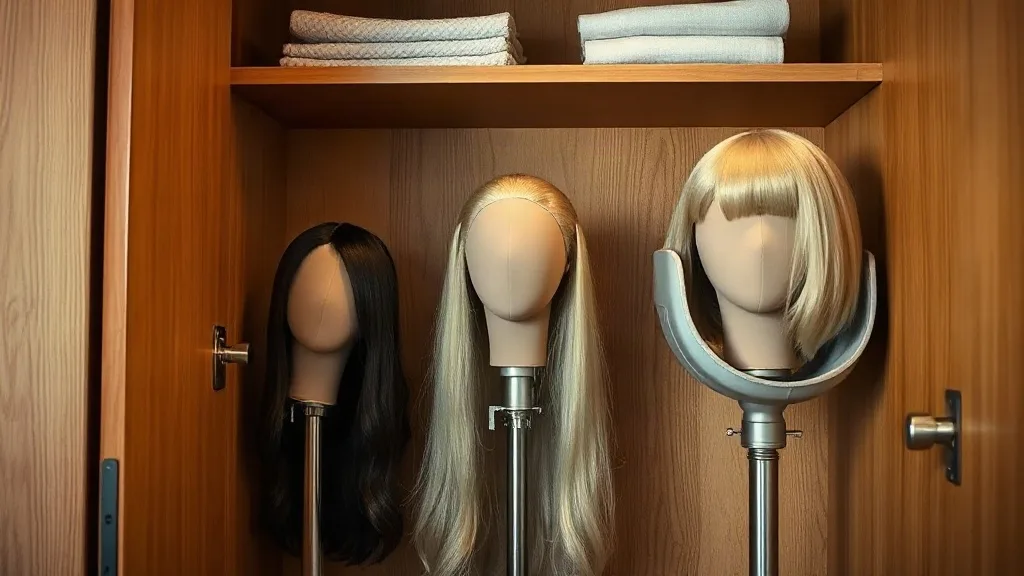
Store wigs on a block or a stand, not folded in a bag, which creates permanent creases. Keep them out of direct sunlight and away from radiators. A dust cover or a clean pillowcase over the stand is enough. If you rotate three units across a week instead of wearing one daily, each one lasts meaningfully longer.
Replace the unit when the ends will no longer hold a shape, when the part is thinning badly enough to show netting, or when the fiber has taken on a dull, matte cast that no serum will lift. Those are structural failures, not styling problems. Because synthetic wigs are inexpensive, replacing one is almost always cheaper and faster than trying to resurrect it.
The Bottom Line
Synthetic fiber is a tool with a specific job: fast, consistent, affordable, low-commitment hair that holds a style and resists weather. It is not human hair and it should not be asked to be. Choose the fiber honestly, choose the cap construction deliberately — especially if you want a visible parting — and care for it with cool water, a wide-tooth comb, and a realistic expectation of three to six months. Do that, and synthetic will outperform its price tag by a wide margin.