
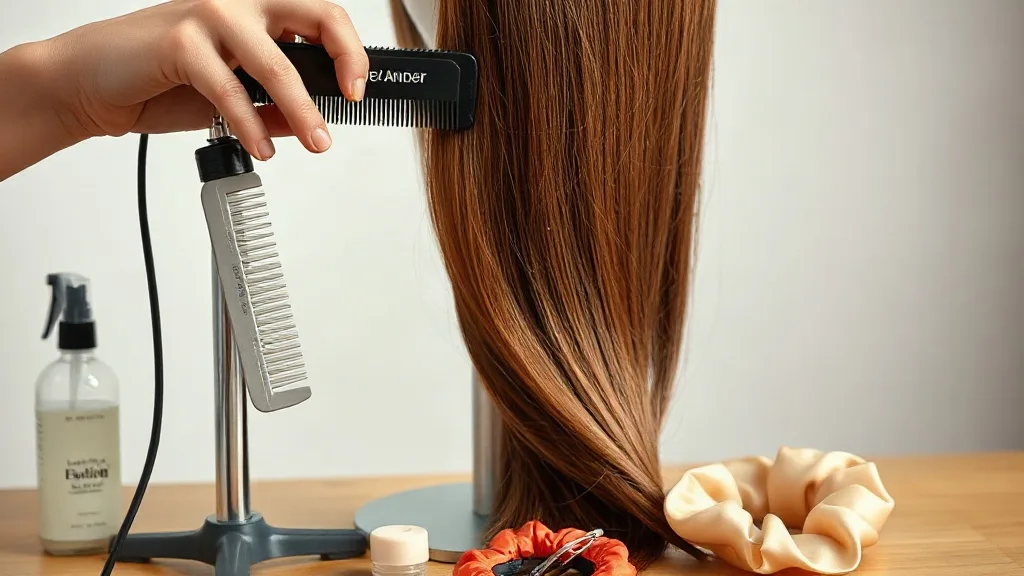


A long wig is a commitment. It looks wonderful, it photographs beautifully, and it will tangle at the nape within about three wears if you treat it like short hair. The good news is that tangling is mostly mechanical, not mysterious. Once you understand what causes it, prevention becomes a short list of habits rather than a constant rescue operation.
This is the routine I recommend to anyone wearing 20 inches or more, whether the fiber is human hair or synthetic. I have also included a safety section at the end, because long hair changes your risk profile around heat and open flame in ways that short styles simply do not. I would rather you think I am fussy than read about you in a news story.
Why Long Wigs Tangle So Easily
Length gives strands far more opportunity to rub against each other, against collars, seatbelts, chair backs, shoulder bags, and your own shoulders. Every one of those contacts creates friction. Friction roughens the cuticle of human hair and scuffs the surface of synthetic fiber, and rough surfaces catch on one another. Add dryness — which makes fiber stiffer and far more prone to static — and you get that familiar matted patch at the nape.
Construction matters too. On a long wig, the hair below the shoulders is usually sewn or wefted onto stretch material rather than knotted individually into lace, and there is typically less of it than on a natural head of hair of the same length. Fewer strands carrying the same visual weight means each strand absorbs more friction. Long wigs are also denser at the crown, so shed hairs have a harder time falling free. They stay trapped in the fiber, wrap around neighboring strands, and form the tiny knots that grow into tangles overnight.
- Friction from clothing, seatbelts, and furniture — the single biggest cause
- Dryness and static, which make fiber rough and grabby
- Shed hair trapped in the length, acting like a tiny anchor for new knots
- Fiber type: standard synthetic tangles faster than remy human hair
- Product buildup from gels, waxes, and sticky sprays
- Sleeping on cotton without containment, which is where most nape mats begin
First, Know What Your Wig Is Made Of
Human hair and synthetic fiber need different handling, and getting this wrong is the fastest way to ruin a long wig. If you are not certain what you own, assume it is standard synthetic and treat it gently until you can confirm otherwise. A test on an inconspicuous strand near the nape is always safer than discovering the fiber's limit halfway down the length.
- Human hair: can be washed with a sulfate-free shampoo, deep conditioned, and heat styled up to roughly 350°F / 175°C with a heat protectant. Remy (cuticle-aligned) hair tangles noticeably less than non-remy.
- Standard synthetic (kanekalon and similar): cannot take direct heat. A curling iron will melt and fuse it instantly, and fused fiber cannot be undone.
- Heat-friendly synthetic: typically tolerates around 300–350°F, but only on a low tool setting, with a test strand first, and with the iron kept moving.
- Blends: treat the whole wig as the most delicate component in the mix.
The Tools That Actually Prevent Tangles
Tools matter as much as technique. Metal-bristle brushes, fine-tooth combs, and anything with rough or seamed teeth will shred long fiber and turn small snags into permanent mats. Build a small kit and keep it with the wig.
- A wide-tooth comb with smooth, polished, seamless teeth
- A loop brush or a wig-specific detangling brush for the finishing pass
- A spray bottle with water and a few drops of leave-in conditioner for human hair
- A silicone-based detangling spray for synthetic fiber
- A wig stand or canvas block head so you can work with both hands
- A satin or silk pillowcase and bonnet
- A heat protectant rated for your specific fiber
Avoid round brushes on tangled length, fine combs, and any tool where you can feel a seam. And never detangle a long wig while it is on your head if you can avoid it. Put it on a stand — you will have both hands, better sightlines, and no scalp tension pulling the cap out of shape.
The Golden Rule: Work From the Ends Up
This is the technique that prevents most damage, and almost everyone does it backwards at first. You start at the bottom, not the top.
- Mist the lower half lightly. Damp, not wet — water tightens existing tangles.
- Divide the wig into four to six sections and clip them out of the way.
- Begin two to three inches above the ends and comb through the last few inches first.
- Work upward in small increments, holding the section just above where you are combing to take tension off the roots.
- Never force the comb. If it stops, you stop. Pick the knot apart with your fingers before trying again.
- Finish with one light pass of a loop brush from crown to ends.
A full detangle on a 26-inch wig can honestly take fifteen to twenty minutes. Rushing is exactly how a small tangle becomes a permanent mat. Put on something to listen to and take your time.
Washing a Long Wig Without Creating a New Tangle
Wash in the direction the hair falls. Never pile a long wig on top of your head the way you would your own hair — that single habit creates more tangles than anything else in this article.
- Comb the wig out completely before it ever touches water.
- Fill a basin or sink with cool to lukewarm water.
- Dilute the shampoo in the water first, then dip the wig and gently squeeze suds through from crown to ends. Do not scrub.
- Rinse with cool water flowing in the same downward direction.
- Apply conditioner from mid-length to ends only. Ten to fifteen minutes for human hair; five minutes maximum for synthetic, using a silicone-based conditioner.
- Squeeze the water out gently. Never wring or twist.
- Blot with a towel, then lay flat on a dry towel or place on a stand to air dry.
Wash less often than you think you should. A long wig worn over a wig cap collects far less scalp oil than natural hair. Every eight to twelve wears is reasonable for human hair, ten to fifteen for synthetic, and more often only if you use a lot of styling product.
Drying and Heat: Where Long Wigs Get Damaged
Air dry whenever you possibly can. If you must use a blow dryer, apply heat protectant first, keep the dryer on the lowest setting that does the job, hold it at least six inches away, and keep it moving. Never park hot air on one section of a long wig — that is how you get a stiff, crinkled, permanently distorted patch in the middle of the length.
With flat irons and curling wands, the rules are stricter. Test a single inconspicuous strand before you touch the length. Work in small sections. Never rest a hot tool on the fiber while you answer your phone, and never leave a plugged-in iron sitting on a dresser next to a wig. A synthetic wig touching a 400°F barrel will melt and fuse on contact, and there is no product, no conditioner, and no amount of patience that will reverse it.
Long Wigs, Open Flames, and Heat Sources: A Safety Note
This is the part I care about most, because long hair changes your risk profile in ways short styles do not. Length is the problem. It hangs. It swings. It does not feel what it is touching. A shoulder-length wig stays clear of a candle on a coffee table; a 30-inch wig sweeping past that same candle can pass through the flame before you have registered what happened.
- Keep at least three feet between long hair and any open flame: candles, fireplaces, fire pits, gas burners, tiki torches, and patio heaters with exposed elements.
- Never lean over a gas stove or a barbecue while wearing a long wig. Pin it up or braid it first, every single time.
- Synthetic fiber melts and drips. Molten synthetic sticks to skin and keeps burning. Human hair ignites and burns like any dry hair. Neither is a small problem.
- Unplug blow dryers, flat irons, and hot rollers after use. Never rest them on a bed, a carpet, or anywhere near the wig.
- Space heaters, heat lamps, and radiator vents can soften and distort synthetic fiber from several inches away, even without direct contact. Store wigs well away from them.
- If you keep real candles, use a glass hurricane and place them out of the path of where you sit and where your hair swings. Flameless LED candles are the genuinely safe option.
- If hair or a wig catches fire: stop, drop, and roll. Smother with a heavy blanket or towel. Cool the area with water and seek medical attention. Do not try to pull a melting wig off skin.
I know that list sounds dramatic. It is also short, easy to follow, and the difference between a good evening and a bad one.
Styling Long Wigs So They Stay Tangle-Free
Style with containment in mind. Any style that keeps the length from swinging freely will cut your detangling time dramatically.
- Loose braids or twists for daily wear are the single most effective tangle prevention you can use.
- Half-up styles are fine, but use satin-covered elastics — never bare rubber bands, which tear fiber on contact.
- Low buns and low ponytails anchored at the nape tangle far less than high, tight styles that pull the cap.
- Lace braids and fishtails look lovely and need redoing every day or two, or shed hair will knot at the base of the braid.
- Skip heavy gels, waxes, and sticky sprays. A lightweight serum on the ends only is plenty.
- Never backcomb or tease the length. A little lift at the crown is fine; teasing the mid-lengths is not.
- If you use adhesive, keep every drop of it away from the fiber.
And when you take the wig off at the end of the day, do not drop it on the bed or the back of a chair. That is how nape mats begin. It goes on the stand, every time.
Night-Time Care and Storage
- Braid loosely or band the length with a satin scrunchie before bed if you sleep in the wig.
- Wear a satin or silk bonnet and use a satin pillowcase. Cotton grabs fiber and roughens it all night long.
- Store on a stand or block head inside a dust bag in a cool, dry place out of direct sunlight.
- Never hang a wet long wig by the lace. The weight of wet fiber stretches and distorts the cap permanently.
- For travel: braid the length, coil it into a silk bag, and pack it inside a hard box.
- Keep stored wigs away from radiators, heat vents, and windows. Heat and UV dry out fiber and fade color.
When the Tangle Wins: Rescuing a Mat
It happens to everyone eventually, usually at the nape. Do not reach for scissors. Saturate the mat with conditioner or silicone detangler and let it sit for twenty to thirty minutes. Work it apart with your fingers first, patiently, from the outside in. Then switch to a wide-tooth comb, entering at the very tip of the mat and working inward in tiny increments. Take breaks. Most nape mats are shed hair held in place by one small knot, and if you can find and release that knot with a pin-tail comb, the entire mat falls apart.
The exception is heat damage. Fiber that has genuinely melted and fused cannot be separated by any method. That section has to be trimmed, or the wig replaced. It is a good argument for testing every new heat tool on a hidden strand before it goes anywhere near the length.
A Simple Weekly Routine
- Daily: one gentle pass with a loop brush, then braid before bed.
- Every three to four wears: light mist and a full detangle from the ends up.
- Weekly: check for trapped shed hair at the nape and spot clean the inside of the cap.
- Every eight to fifteen wears: wash and condition.
- Monthly: deep condition human hair, inspect the lace and wefts for loose stitching, and check every heat tool's cord for fraying or damage.
The Short Version
Long wigs tangle because of friction, dryness, and trapped shed hair — and all three are manageable. Comb from the ends up with a wide-tooth comb. Wash in the direction the hair falls, in cool water, and not very often. Air dry when you can, test every heat tool on a hidden strand, and never let a hot iron rest anywhere near fiber. Braid it at night, store it on a stand, and keep the whole thing well away from flames, stoves, and space heaters. Do that, and a 26-inch wig will stay smooth, wearable, and safe for a long time.