
Curl Is the Hardest Texture to Fake
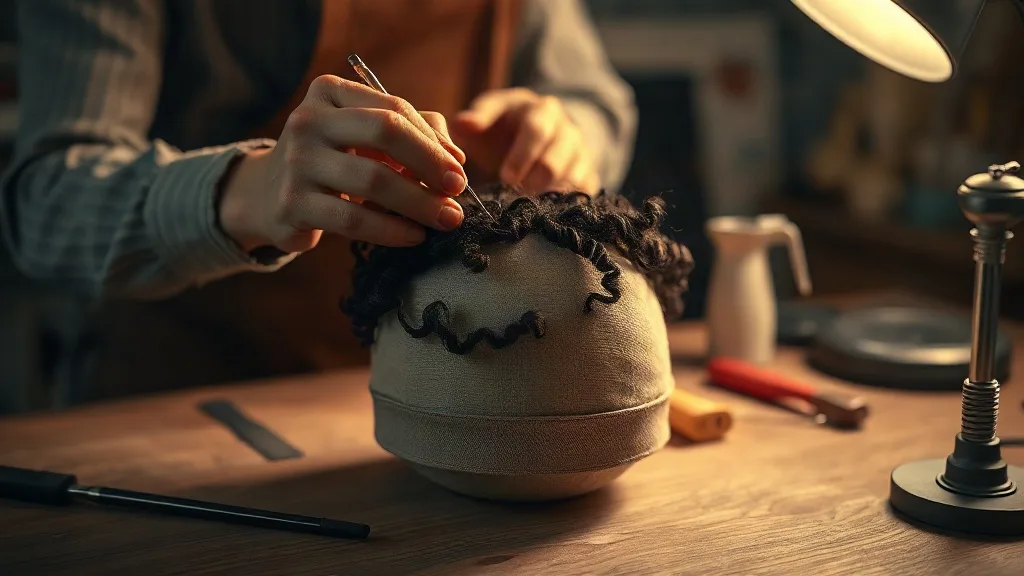
Straight hair forgives a lot. A slightly off straight unit still reads as hair from three feet away. Curls don't give you that cushion. Curls move as a group — they clump, they bounce, they catch light in bands — and when the pattern is wrong, the whole thing reads as a wig from across the street. I re-ventilate lace for a living, which means I spend my days matching single hairs through a magnifier, knot by knot, curl by curl. That work teaches you fast what a mirror and a camera can't hide.
So here's the speed-run: texture match beats price, density beats length, and cap construction decides whether the curls hang like hair or sit like a helmet. Everything below is the long version of that.
Curl Families, Translated From Vendor Language
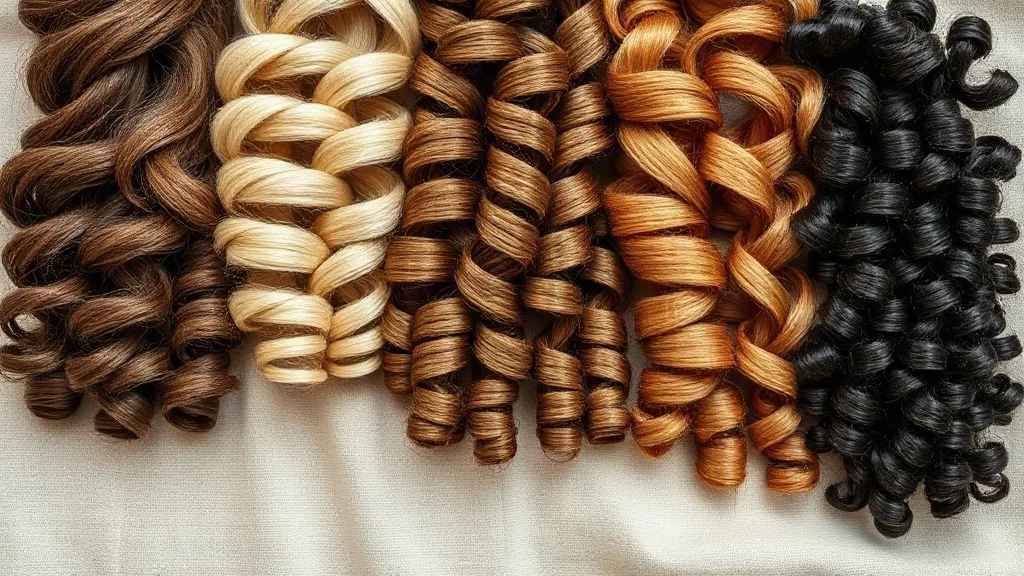
Every vendor invents their own names, and the same word means different things at different factories. Here's my translation chart, loosest to tightest.
- Loose wave / body wave (roughly 2B–2C). A soft S that moves with air. The most forgiving texture on the market and the easiest one to blend if your own hair is relaxed or heat-styled. This is the default I'd hand a first-time buyer.
- Natural wave / water wave (2C–3A). A touch more definition, still loose, still low-risk. Great for a 'just left the beach' look.
- Curly / spiral (3A–3B). The classic ringlet people picture when they say curly wig. Springs back, holds shape, photographs beautifully. Diameter varies wildly between suppliers, so ask for measurements before you commit.
- Deep wave / loose deep (3B–3C). Springier and heavier in the ends. Reads fuller than a spiral at the same density, which matters if you want volume without going to 180%.
- Corkscrew / kinky curly (3C–4A). Tight, defined, heavily clumped. This is the texture that looks most like it grew out of a scalp — and the least forgiving of a bad cut.
- Coily / afro kinky (4B–4C). Maximum volume, minimum drape. Stunning when it's shaped correctly, a disaster when it's cut blunt. This is the one texture where I'd never let a general-purpose stylist near it.
One rule before you shop: never trust stock photos. Ask for a video of the actual unit, in daylight, on a head or a stand. Stock photos are lit and edited to sell pattern, and pattern is exactly what you need to evaluate.
The Three Things That Actually Read as Natural
Pattern is only a third of it. These are the three things I check on every curly unit that crosses my bench.
- Strand diameter. Fine hair curls tighter and softer; coarse hair holds a bigger, shinier curl. Put a coarse 4A texture on someone with fine hair and it looks like a hat no matter how good the curl is.
- Density. Curly wigs are usually over-built. 150%–180% in a corkscrew looks like a cloud, not a head of hair. I default to 120%–130% for tight textures and 130%–150% for loose waves.
- Curl direction and memory. Curls have to run the way your own hair grows and hang the way gravity pulls. Factory-set curls sometimes spiral inward on one side and outward on the other. That mismatch is the number one tell, and it's the thing I fix most often during re-ventilation.
Blending, Leave-Out, or a Clean Glueless Install
If you have your own curls, tex-matching is everything. Bring a clean, product-free section of your own hair to the purchase — a photo won't do it, because phone cameras shift curl diameter. With a proper match, a U-part or a leave-out of an inch and a half disappears. Get it wrong and you'll see the seam in every photo.
If you don't have leave-out, or you simply don't want to blend daily, go glueless. Pre-cut lace with an elastic band is the fastest, kindest install going, and it takes the load off the front hairline — which matters more with curls, because curly units are heavier.
Cap Construction Decides Everything With Curls
Curly hair is heavier per inch than straight hair, because there's more fiber packed into every square centimeter and the pattern traps air. That weight pulls on the cap. Construction matters here more than with any straight unit.
- 13x4 or 13x6 lace front: the workhorse. Enough parting space for a believable middle part, enough structure to carry the weight.
- Full lace or 360: most versatile, most expensive. Worth it if you want high ponytails — just remember a curly ponytail exposes the entire cap.
- Glueless pre-cut with elastic band: what I recommend most people buy now. Faster install, less adhesive damage, and the band absorbs some of the pull.
- Silk top or mono top: hides knots at the part beautifully. With tight coils you often don't need it because the curls cover the knots themselves. With loose waves, it's worth the upgrade.
- Wefted or capless: lightest and coolest on the scalp, but no parting. Perfect under a hat or under your own hair in a U-part.
Density, Length, and Curl Shrinkage Math
Curls eat length. A 20-inch corkscrew unit measures closer to 14 or 15 inches once it's dry and settled, and shrinkage runs anywhere from 30% to 50% depending on texture. If you want shoulder-length curls, buy for the curl, not the number on the tag.
Density works the same way in reverse. A 130% curly unit reads fuller than a 150% straight unit, because every strand takes up more space. Going heavy on density in a tight texture is the fastest way to look like you're wearing a wig, so resist it.
Human Hair vs Synthetic for Curls
Human hair moves, dyes, and takes heat, but its curls relax over time. Steam-processed patterns slowly drop with wear and washing, and by month ten or twelve you're looking at a steam reset or a replacement. Budget for that.
Synthetic holds its pattern essentially forever, costs a fraction, and modern heat-friendly fibers in 3B and 4A look better than their reputation suggests. The trade-offs are less movement, more shine, and tangling at the nape. For a specific look worn a few times a week, synthetic wins on price per wear.
Why a Curly Wig Needs Shaping Before You Wear It
Factory curly units arrive with blunt, uniform ends. Every strand is the same length, so the curl clumps into one big triangle instead of falling in layers. That triangle is why so many curly wigs look costume-y straight out of the box.
- Cut it dry. Never shape curly hair wet — you'll cut twice as much as you meant to.
- Point-cut the ends curl by curl to break up the wall of uniform length.
- Remove weight at the crown so the curls fall instead of stacking.
- Keep the perimeter slightly longer than the interior to frame the face.
- Steam set or reset with curl rods to bring the pattern back after cutting.
Curl Care Rules I Don't Bend On
- Never brush it dry. Wide-tooth comb, in the shower, ends working upward. That's it.
- Co-wash or use sulfate-free shampoo. Sulfates strip the cuticle and the curl goes with it.
- Squeeze water out with a microfiber towel or an old t-shirt. Never rub.
- Diffuse on low heat and don't touch the curls while they dry. Touching is what makes frizz.
- Pineapple it at night, and sleep on satin. Cotton grabs the cuticle and unravels curl clumps.
- Refresh with water and a leave-in, not alcohol sprays. Alcohol dries the fiber and the pattern collapses.
- Keep direct heat off unless you're deliberately resetting with steam.
- Rotate two units if you wear curly daily. They need a rest day more than you do.
And if the curl drops at the front hairline — the area that gets handled most — that's a re-vent job, not a new unit. Matching curl diameter and direction along a perimeter is fast work, and it's far cheaper than replacing a wig that already fits you.
The 60-Second Buying Checklist
- Match the curl pattern to your own texture, not to a photo you liked online.
- Ask for a daylight video of the actual unit.
- Default to 120%–130% density in corkscrew and coily textures.
- Buy length for the curl, not the label — assume 30%–50% shrinkage.
- Choose a cap that can carry the weight: lace front, glueless band, or full lace.
- Budget for a dry cut and a curl reset after purchase.
- Confirm the return window before you cut any lace.
- Ask whether the curls are steam-processed or natural. It tells you how they'll age.
Bottom Line
The most natural curly wig isn't the most expensive one — it's the one whose curl diameter, density, and direction match what's already on your head, on a cap that can hold the weight, shaped by someone who knows to cut it dry. Get those four things right and nobody will be able to tell. Get them wrong and no price tag will save you.