I own more wigs than I own plates. Somewhere in my collection there is a neon mullet that used to be shoulder-length, and the reason it is now a very short neon mullet is that I once believed a 400-degree flat iron would 'just go through quickly.' It did go through quickly. So did the fiber. What was left was a smell I can only describe as Barbie going through a difficult divorce, fused to my ceramic plates for a week.
So let's do this properly. Heat styling a wig is completely doable, but it is not the same as heat styling the hair growing out of your scalp. Real hair is keratin. It forgives you, mostly, and it grows back. Wig fiber is either keratin attached to a cap or it is plastic engineered to look like keratin, and plastic keeps a grudge forever. This guide covers how to figure out what you're actually holding, what temperatures are safe, and how to use flat irons, curling wands, hot rollers, and blow dryers without a tragedy.
Step One: Find Out What Your Wig Is Actually Made Of
Everything else in this article depends on this one question. A human hair wig and a heat-friendly synthetic wig can both be flat ironed, but at different temperatures. A standard synthetic wig from a costume shop cannot be flat ironed at all, at any temperature, by anyone, ever, no matter what the internet tells you. Getting this wrong is how you end up with a wig that looks like it survived a house fire.
- Human hair wigs: Remy, virgin, or unprocessed human hair. These behave like your own hair and tolerate 300-375°F with a heat protectant.
- Heat-friendly synthetic: fibers sold under names like Futura, or under brand lines marketed as heat defiant, heat friendly, or heat resistant. These usually tolerate 250-350°F, and the manufacturer states an exact maximum on the label. Believe the label, not the influencer.
- Standard synthetic: kanekalon, modacrylic, and anything just labelled 'synthetic fiber.' These begin to frizz, fuse, and melt somewhere around 175-200°F. A hot blow dryer can damage them. Keep all irons away.
- Blended wigs: part human hair, part synthetic. Treat these as synthetic unless the manufacturer explicitly says otherwise. The synthetic portion will fail first and it will take the human hair down with it.
If the label is missing or it's a mystery wig from a flea market (respect), do a test strand. Flip the wig inside out and find a small weft near the nape where a mistake won't show. Set your iron to the lowest setting, around 250°F, and pass it over two or three strands for two seconds. If the fiber glides and softens, you're probably fine. If it crinkles, shrinks instantly, or smells sweet and chemical, stop immediately. That smell is plastic, and it is telling you the truth.
The Temperature Cheat Sheet
- Standard synthetic (kanekalon, modacrylic, unlabelled): no heat tools. Cool air and steam only.
- Heat-friendly synthetic: start at 250°F, work up in 25-degree steps only if needed, never exceed the manufacturer's stated maximum (commonly 300-350°F).
- Human hair wig, straightening: 300-350°F. You rarely need more, and going above 375°F on a wig is asking for a dry, brittle finish.
- Human hair wig, curling: 300-350°F, with shorter contact time than you'd use on your own head.
- Lace fronts, closures, and hairlines: same temperature as the rest of the wig, but the iron should not touch the lace at all.
- Blow dryer on any wig: cool or low heat only. High heat on synthetic is a hair-shaped death ray.
One more note on tools: ceramic and tourmaline plates distribute heat more evenly and are gentler on wig fiber. Titanium plates run hot and hold heat aggressively, which is great for thick human hair and terrible for a delicate lace front. Also, skip the bargain mini flat iron with no temperature dial. A tool you can't turn down is a tool you can't use here.
The Rules That Apply to Every Heat Tool
- Dry fiber only. Water plus a hot iron equals steam, and steam inside a synthetic fiber means instant frizz. Never style a wet wig with a hot tool.
- Always use a heat protectant. A light silicone-based thermal spray, applied evenly, then allowed to dry fully before the iron goes anywhere near it.
- Work in small sections, roughly one inch wide. Thick sections force you to hold the iron in place longer, which is exactly how fiber gets cooked.
- Keep the tool moving. Two to three seconds per pass, no parking, no pressing.
- Two passes maximum. If it isn't straight after two, your temperature or your sectioning is wrong, not your patience.
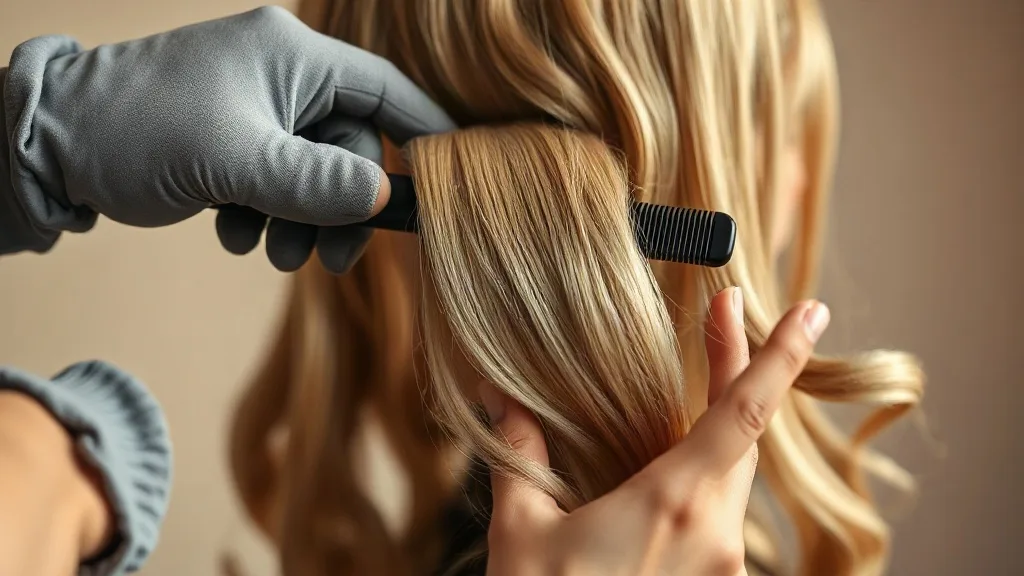
- Protect your holding hand. A heat-resistant glove, or guide the hair with a fine-tooth comb instead of your fingers.
- Know where the cap, knots, and lace are. Irons love lace. Lace does not love irons.
- Let the wig cool completely before you put it on your head, brush it, or store it. Hot fiber has no memory yet. Cool fiber does.
Flat Ironing a Wig, Step by Step
Flat ironing is the most common heat styling request and also the most destructive when done carelessly, because a flat iron clamps down and holds. Here's the order of operations I use on everything from a $40 party wig to a human hair lace front.
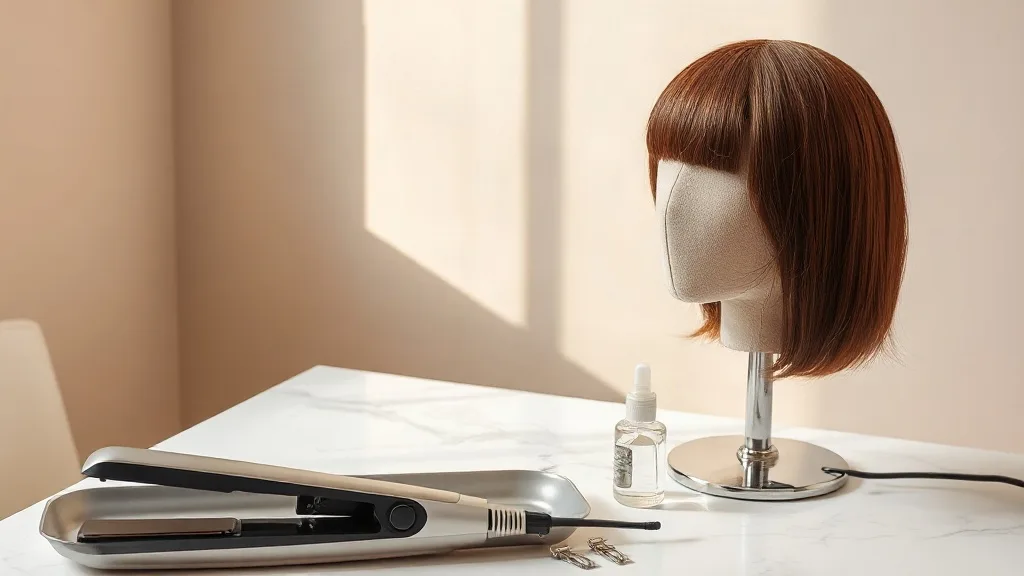
- Set up properly. Pin the wig to a canvas block on a stand at eye level with T-pins, or wear it with a wig grip if you're blending it with your own hair. Never iron a wig lying flat on a table. You'll crush the cap and miss half the fiber.
- Detangle first. Wide-tooth comb, from the ends upward. Every knot you iron over becomes a permanent kink.
- Apply heat protectant and let it dry completely. A wet spray plus a hot plate is a steam burn waiting to happen on both the wig and you.
- Section the wig with clips. Start at the nape, work upward, and keep the unworked hair out of the way.
- Set your temperature to the lowest setting in the safe range. You can always go warmer. You can never go back.
- Clamp and glide in one smooth pass from mid-shaft to the ends. Avoid the first one to two inches near the cap, where the wefts and adhesive live.
- Let each section cool on the block before moving on. Hands off while it's hot.
- Finish with a light brush and a cool shot from the blow dryer to close the cuticle and set the shape.
Curling Irons, Wands, and Hot Rollers
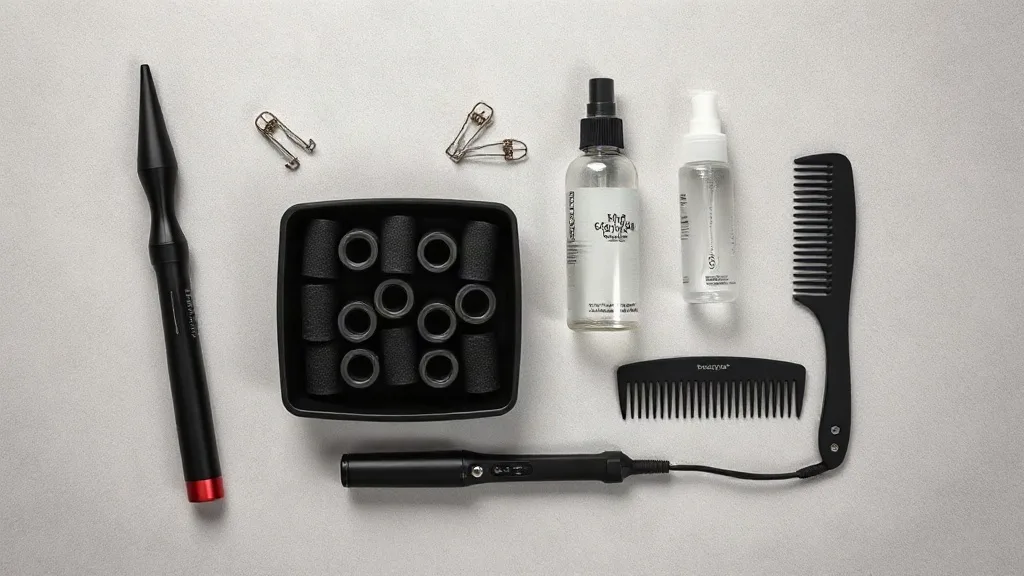
Curling is riskier than straightening, because the hair stays wrapped around a hot barrel for several seconds instead of passing through once. On heat-friendly synthetic, hold for three to five seconds maximum. On human hair, five to eight seconds is usually plenty. Then release the curl, pin it with a clip, and let it cool completely before you touch it. The curl sets during cooling, not during heating, which is the part most people rush and then blame the tool for.
Barrel size decides the whole look. A one-inch barrel gives soft, loose waves. Three-quarters of an inch is the classic curl. Half an inch or smaller is where you go if you want ringlets, novelty volume, or a spiral that defies gravity. Alternate the direction of each curl so the finished style doesn't look like it was done by a machine.
Hot rollers are the friendliest heat tool in a wig wearer's kit. They're set low, they heat evenly, and they don't clamp. Foam and flocked rollers on a low setting are excellent on human hair wigs and generally safe on heat-friendly synthetic at the lowest setting, though you should still do a test strand first. Roll while the fiber is dry, let the rollers cool fully in place, then remove them gently. If your rollers have no temperature control, keep them moving and don't leave them in for more than ten minutes.
What to avoid outright: crimpers, hot combs on synthetic fiber, and anything that clamps and sits. A hot comb on a standard synthetic wig is a one-way ticket to a fused, shiny mess. I learned that one in 2011 and I'm still annoyed about it.
Blow Dryers: The Tool Everyone Forgets Is a Heat Tool
People will guard their flat iron temperature with religious care and then blast a synthetic wig with a blow dryer on high. Air temperature matters. On standard synthetic, hot dryer air can frizz and fuse the fiber, and it can also soften the adhesives holding the wefts to the cap. On heat-friendly synthetic, use cool or low heat only. A diffuser on a low, cool setting is excellent for lifting volume at the roots.
For human hair wigs, drying on medium heat with a round brush is fine, but do it on the block when you can. Drying a wig on your own head at high heat means you're warming the cap, the wefts, and your scalp all at once. Take the wig off, put it on a stand, and dry it there. It takes longer and saves the wig.
Styling on a Block vs. Styling While You Wear It
Styling on a block is safer, more precise, and always my first recommendation. You can see what you're doing, you can work in clean sections, and you can let everything cool without gravity fighting you.
That said, there are times you need the wig on your head: blending your own hairline, face-framing pieces, checking the fall of a curl against your jaw. If you're styling on your head, drop the temperature by 25-50 degrees, keep the iron well away from your scalp, and work slowly in the mirror. Your own hair and ears are not heat-friendly, and a burn on your neck is a much worse souvenir than a ruined wig.
Lace fronts deserve their own warning. Don't run an iron across the lace, the knots, or the hairline edge. If the hairline needs smoothing, use a fine-tooth comb and low-heat air, or wrap the lace with a cloth while you work nearby. Melted lace doesn't grow back, and neither do the knots.
When It Goes Wrong: Frizz, Crunch, and the Fabric Softener Rumor
On a human hair wig, damage is recoverable in the short term. Deep condition, do a protein treatment if the fiber feels mushy, trim split ends, and lower your temperature next time. Human hair responds to moisture and protein the same way your own hair does.
On synthetic, melted is melted. There is no product that un-melts plastic. Your options are to trim the damaged section away, hide it with a curl or an updo, or repurpose the wig. If the fiber is merely rough and frizzy rather than fused, a soak in heavily diluted fabric softener is a widely used trick that coats the fiber and makes it feel softer. It is not a repair, it can leave buildup, and it will wash out eventually, but if the alternative is throwing the wig away, it's worth a try.
The real prevention is rotation. Heat-styled wigs should be styled less often than they're worn. If you have one wig you love, buy a backup, or style it once and maintain it with non-heat methods.
The Non-Heat Alternatives That Genuinely Work
- Pin curls and wet sets on damp human hair, left overnight. Zero heat, excellent results, and the curls last.
- Velcro rollers plus cool air from a dryer. Volume without a single hot plate touching the fiber.
- Steam setting, using a garment steamer held at a distance to relax and shape human hair and heat-friendly synthetic.
- The hot water dunk method on synthetic: dip the wig briefly in water that has just come off the boil, then shape and let it cool. It sounds alarming, but it's a controlled, uniform heat set rather than a localized blast.
- Buying wigs that are already styled the way you want. Cheapest and most reliable heat-protection strategy in existence.
Safety Notes That Are Not Boring, Because Burns Aren't
- Heat tools reach 350-450°F. That's above the smoke point of many hair oils and sprays.
- Never spray aerosol products near a hot tool. Alcohol-based sprays plus an open element is a fire.
- Ventilate the room. Melting synthetic fiber off-gasses, and the smell isn't just unpleasant, it's a signal to stop and open a window.
- Rest hot tools on a ceramic or metal tray, never on a wig, a foam block, a towel, or a bed. Some styling blocks will literally melt under a hot iron.
- Unplug everything when you're done and let it cool before storing.
- Keep wig caps, mesh, and packaging away from the hot zone. This is obvious right up until the moment it isn't.
- If you feel heat on your scalp through the fiber, stop. That's not the wig getting healthy.
Quick Answers to the Questions I Get Most
- Can I flat iron a synthetic wig? Only if it's explicitly labelled heat friendly or heat defiant, and only under the stated maximum temperature with a heat protectant. Standard synthetic: no.
- What temperature melts a synthetic wig? Most standard fibers start to frizz, shrink, or fuse somewhere around 175-200°F, which is below the lowest setting on many flat irons.
- Can I style a wig while wearing it? Yes, at a lower temperature and with care, but a canvas block is safer and more precise.
- How often can I heat style a wig? Human hair, roughly weekly with conditioning. Heat-friendly synthetic, as rarely as you can manage. Standard synthetic, never.
- Do I need a heat protectant on a synthetic wig? Yes. It won't make a non-heat-friendly wig safe, but on heat-friendly fiber it meaningfully reduces friction damage and shine loss.
The Collector's Closing Rules
I have a rainbow afro in my collection that has never once been near a hot tool, and it is the happiest object in my house. Meanwhile the neon mullet lives in a box, in disgrace, a monument to the idea that one quick pass won't hurt. Test the strand. Read the label. Turn the dial down. Use the protectant. Let it cool. And if you're about to do something ambitious at 400 degrees, ask yourself whether you'd do it to a plastic bottle, because that is essentially what you're holding.