

The Wigonomics of Dyeing at Home: A Risk-Adjusted Calculation
Human hair wigs are an investment. A quality lace-front can run from $300 to $2,000 or more. When you decide to dye one at home, you're not just mixing chemicals—you're making a financial decision with a measurable risk of loss. The upside is obvious: salon coloring can cost $100–$300 per session, and a full re-color every few months adds up. The downside is equally clear: a botched dye job can turn a $600 wig into a $0 wig. So before you reach for the dye bottle, run the numbers. If your wig is synthetic, stop here—synthetic fibers can't be dyed with conventional human-hair color. If it's human hair, the question becomes: is the potential savings worth the risk? That depends on the wig's fiber quality, its current color, and your target shade.
Is Your Wig Actually Dyeable? The Fiber Test
Not all human hair wigs are created equal. The label 'human hair' can mean anything from premium Remy virgin hair to heavily processed strands that have already been stripped and colored. The more processed the hair, the more fragile it is—and the less dye it will accept evenly. To assess dyeability, start with a strand test. Snip a small section from an inconspicuous area (like the nape or under-layer), apply your chosen dye mixed according to instructions, and process for the recommended time. Rinse and dry. If the color takes evenly and the hair still feels soft, you're in good shape. If it feels dry, brittle, or the color is patchy, your wig is telling you something: don't proceed.
- Check the label: 100% human hair is required for dyeing. Blends and synthetics are a no-go.
- Remy vs. non-Remy: Remy hair has cuticles aligned in the same direction, which means more even color absorption and less tangling.
- Virgin vs. processed: Virgin hair has never been chemically treated. Processed hair may already be dyed, relaxed, or bleached—additional chemical processing increases damage risk.
- Lace front consideration: The lace and knots are delicate. Dye can stain the lace or loosen knots, so you'll need to apply color carefully around the hairline.
The Real Cost of DIY vs. Salon: A Break-Even Analysis
Let's talk money. A salon color appointment for a human hair wig typically costs $100–$300, depending on the salon, the length, and the complexity. At-home dyeing requires an upfront investment in supplies: a demi-permanent or permanent dye ($10–$20), developer ($5–$10), a tint brush and bowl ($5–$15), gloves ($3), a color-safe shampoo and conditioner ($15–$30), and possibly a wig stand ($10–$20). Your total outlay might be $50–$100. If you're successful, you save $50–$200 on the first dye job alone. But if you ruin the wig, you lose the entire value of the wig—plus the supplies. For a $500 wig, that's a $550–$600 loss. The break-even point: if the probability of success is high (say, 80% or more), DIY is a smart bet. If your wig is extremely light and you want to go several shades darker, success is likely. If you want to go lighter—especially from dark brown or black to blonde—success is much lower without professional help. That's when the risk-adjusted cost flips.
Also consider your time. A salon appointment takes 1–2 hours. DIY dyeing, including prep, application, processing, rinsing, and cleanup, can take 3–4 hours. If your time is worth $25/hour, that's an additional $75–$100 in opportunity cost. Factor that in, and the savings shrink. But for many wig wearers, the satisfaction of mastering a new skill and the convenience of at-home coloring outweigh the time cost. Just be honest about your own risk tolerance.
What You'll Need: The No-Nonsense Shopping List
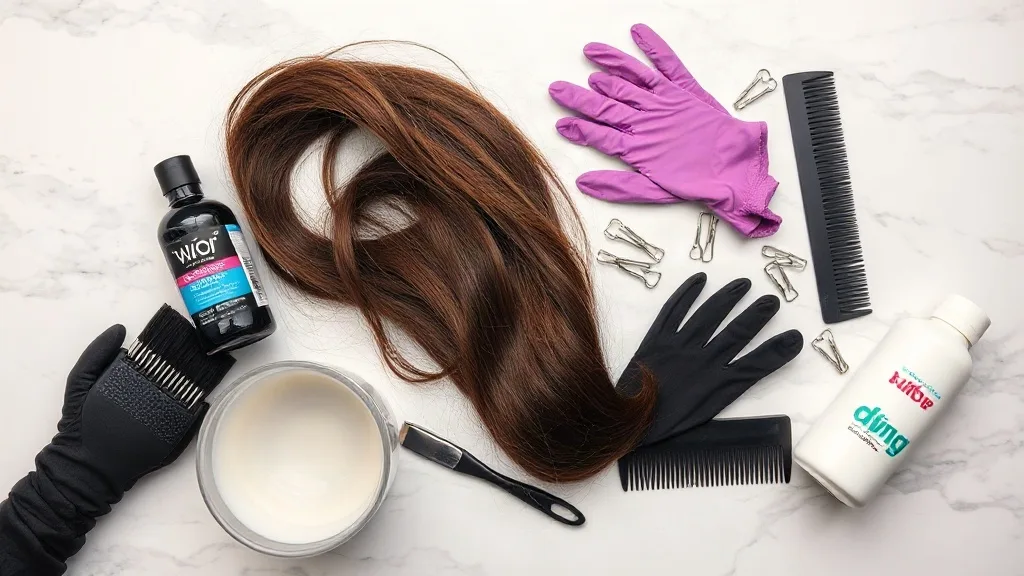
Before you start, gather everything. Missing a tool mid-process can lead to uneven application or rushed decisions. Here's the essential kit:
- Human hair wig (100% human hair, strand-tested)
- Demi-permanent or semi-permanent hair dye (deposit-only is safest)
- Developer: 10 volume for deposit, 20 volume for gray coverage or slight lift. Avoid 30 or 40 volume on wigs.
- Non-metallic bowl and tint brush
- Nitrile or latex gloves (two pairs)
- Wide-tooth comb and sectioning clips
- Color-safe shampoo and deep conditioner
- Plastic wrap or foil (for processing)
- Timer
- Wig stand or mannequin head
- Old towel or cape
- Thermometer (optional, for water temp)
A note on dye choice: demi-permanent dyes are your friend. They deposit color without lifting the cuticle as aggressively as permanent dyes. They also fade gradually, which means less visible root lines and less commitment. If you're covering gray, choose a demi-permanent with 10-volume developer. If you're going darker, a semi-permanent or demi-permanent is ideal. If you're going lighter, you'll need permanent dye and likely bleach—which is where most at-home disasters happen. My advice: don't bleach a wig at home. The risk-to-reward ratio is simply too poor.
Step-by-Step: How to Dye a Human Hair Wig Without Ruining It
Follow these steps in order. Rushing any stage increases the chance of a costly mistake.
- Prep the wig: Wash with a clarifying shampoo to remove product buildup. Rinse thoroughly and gently towel-dry. Do not condition before dyeing—conditioner can block color absorption.
- Detangle and section: Comb the wig from ends to roots. Divide into four sections: front, back, left, right. Secure with clips.
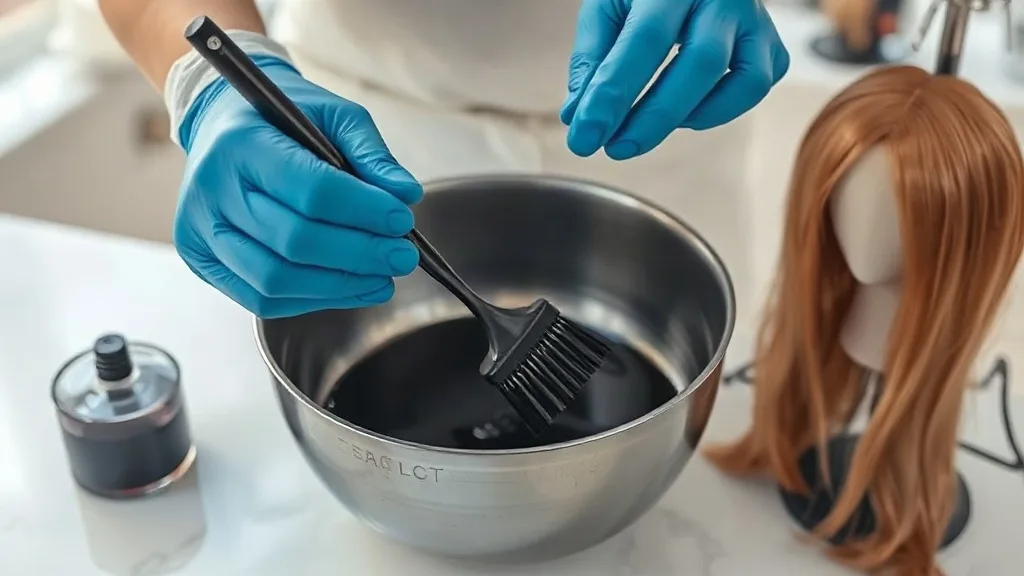
- Mix the dye: In a non-metallic bowl, combine dye and developer according to the instructions. Mix until smooth. Wear gloves.
- Apply to mid-lengths and ends first: Start about an inch from the roots and work down to the ends. This prevents hot roots (overly bright roots from scalp heat—though wigs don't have scalp heat, the roots are often lighter and more porous).
- Apply to roots last: Once mid-lengths and ends are saturated, go back and apply to the root area.
- Process: Cover with plastic wrap or foil to retain moisture and heat. Set a timer for the recommended processing time. Check every 5 minutes by wiping a small section with a damp cloth.
- Rinse: Rinse with cool water until the water runs clear. Do not shampoo immediately—just rinse.
- Shampoo and condition: Use a color-safe shampoo, then apply a deep conditioner. Leave on for 10–15 minutes. Rinse with cool water.
- Dry and style: Gently blot with a towel. Air-dry on a wig stand or use a low-heat blow dryer. Avoid high heat, which can fade color and damage fibers.
Throughout the process, handle the wig gently. Human hair is more fragile when wet, and lace fronts are especially vulnerable. Never scrub or wring the wig.
The Biggest Risks and How to Avoid Them
Even with careful execution, things can go wrong. Here's what to watch for and how to mitigate the damage.
- Uneven color: Usually caused by insufficient saturation or skipping sections. Avoid by working methodically and using enough dye.
- Brassiness: Happens when you lift the hair's natural color and don't deposit enough cool tones. Use a demi-permanent with ash or cool undertones, or add a color-correcting toner.
- Over-processing: Leaving dye on too long or using too high a developer volume. Stick to 10-volume unless you're covering gray, and never exceed the recommended time.
- Lace staining: Dye can permanently stain lace. Apply color with a small brush, avoiding the lace, or use a protective barrier like petroleum jelly along the hairline.
- Dryness and breakage: Chemical processing strips moisture. Follow up with a protein treatment and deep conditioning. Avoid heat styling for at least a week.
- Scalp irritation: If you're dyeing the wig while wearing it, do a patch test 48 hours before. Better yet, dye the wig on a stand, not on your head.
When to Walk Away: The High-Risk Scenarios
There are times when the smartest financial decision is to pay a professional. Consider these red flags:
- You want to go from dark brown or black to blonde. This requires bleaching, which can easily destroy the hair. The risk of ruining a $500+ wig is too high.
- Your wig has a delicate lace front and you're not confident you can avoid the lace. One slip can stain the lace and ruin the illusion.
- Your wig is already dry, brittle, or heavily processed. Adding more chemicals will only accelerate its decline.
- Your wig is a synthetic blend or has synthetic fibers mixed in. Even a small percentage of synthetic hair won't dye properly and can melt under heat.
- You're short on time or patience. A rushed dye job is a bad dye job. If you can't dedicate 3–4 hours, reschedule.
In these cases, a professional colorist who specializes in wigs is worth the cost. They have the experience to assess the hair's condition, choose the right products, and execute the color safely. Think of it as insurance on your investment.
Maintenance After Dyeing: Protecting Your ROI
Once you've dyed your wig, the clock starts ticking. Color fades, especially with washing and heat styling. To maximize the life of your color and your wig:
- Wash with sulfate-free, color-safe shampoo. Sulfates strip color and dry out hair.
- Use cool or lukewarm water. Hot water opens the cuticle and releases color.
- Deep condition weekly. Look for products with keratin, argan oil, or shea butter.
- Limit heat styling. When you do use heat, apply a heat protectant and keep the temperature below 300°F.
- Avoid sun exposure. UV rays fade color. Store your wig in a cool, dark place or use a UV protectant spray.
- Handle gently. Brush from ends to roots, and never brush a wet wig aggressively.
With proper care, a dyed human hair wig can look salon-fresh for 4–8 weeks, and the color can last even longer with touch-ups. But remember: every wash, every heat style, and every chemical treatment shortens the wig's lifespan. Treat it like the investment it is.
Final Verdict: The Wigonomics of At-Home Dyeing
Dyeing a human hair wig at home can be a smart financial move—if you approach it like an investor, not a gambler. The math favors DIY when you're going darker, refreshing an existing color, or covering gray. It favors the salon when you're going lighter, working with a delicate lace front, or dealing with already-damaged hair. Always do a strand test. Always use demi-permanent dye and 10-volume developer when possible. And always ask yourself: what's the worst-case scenario, and can I afford it? If the answer is 'I'd lose a $600 wig,' the $150 salon fee looks like a bargain. But if you're confident, prepared, and patient, you can achieve beautiful, customized color at home—and keep more money in your pocket.