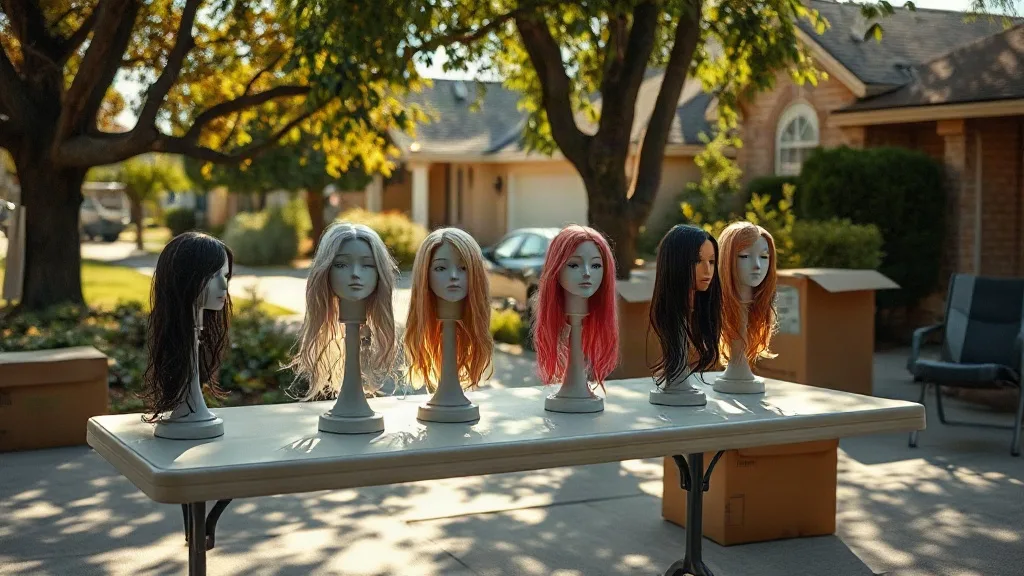
I have never paid more than $12 for a wig. That is not a humble brag - it is the reason I know more about dyeing synthetic hair than I ever wanted to. When you buy secondhand, you do not get to choose the color. You get whatever the previous owner fell out of love with: an ashy platinum gone yellow-gray, a chestnut that reads orange in daylight, a jet black number that is lovely on someone with a completely different complexion than mine.
The good news is that some of those wigs can be fixed. The bad news is that the internet is stuffed with confident advice about coloring synthetic wigs that will turn your bargain into a plastic tumbleweed. I have ruined my share - a $5 Kanekalon bob that melted into a stiff helmet, a lovely lace front I turned the color of a bruised avocado - so you do not have to. Here is what actually works, and what to avoid at all costs.
First, Understand What You Are Working With
Synthetic wig fiber is not hair. It is a plastic filament, usually modacrylic, sometimes polyester, sometimes vinyl or an acrylic blend like Kanekalon or Toyokalon. Human hair is a protein with a cuticle that opens and closes, which is exactly what makes traditional hair dye work: the cuticle lifts, pigment goes inside, the cuticle closes. Synthetic fiber has no cuticle, no protein, and no interior structure to speak of. It is a solid strand of polymer that was already colored during manufacturing, with the pigment locked inside the plastic itself.
That one fact explains almost everything. You can rarely remove color. You can rarely push color deep into the fiber. And the heat required to soften the fiber enough to accept any dye at all is the same heat that can destroy it. Once you accept those limits, the whole subject gets a lot simpler.
What Doesn't Work (and What It Costs You)
- Permanent hair dye with developer - The peroxide and ammonia cream you would use on human hair. It cannot lift synthetic pigment, it does not deposit evenly, and the developer can leave the fiber gummy, dull, and prone to shedding. It also bleeds onto your scalp, pillow, and collar for weeks.
- Bleach and lighteners - Synthetic pigment is not sitting on the surface waiting to be stripped. It is part of the plastic. Bleach at best does nothing and at worst turns the fiber crunchy and brittle, snapping at the crown within a week.
- Going lighter, generally - There is no reliable at-home method. If you want a lighter wig, buy a lighter wig.
- Box dye, henna, and natural dyes - Same problem as permanent dye, plus henna can leave a gritty residue that never rinses fully clean.
- Semi-permanent human-hair glosses and toners - Some people get a faint temporary tint, but it typically washes out in one wear and often leaves the fiber feeling coated and stiff.
- A rolling boil on unknown fiber - Boiling water will melt cheap modacrylic and turn Kanekalon into a frizzy, matted mess. If you do not know the fiber, assume it is fragile.
- Hot tools on a freshly dyed wig - Dyeing can lower the fiber's heat tolerance. If the wig was not heat-friendly before, it definitely is not after.
What Actually Works
There are three approaches that genuinely work on synthetic wigs, and they all share the same limits: you can go darker, you can shift the tone warmer or cooler, and you can do targeted touch-ups. That is the entire menu. Within those boundaries, though, you can rescue a surprising number of ugly-duckling wigs.
- Disperse dyes made for synthetics - Rit DyeMore Synthetic and Jacquard iDye Poly are the two most reliable. They are formulated to bond with polyester and synthetic polymers, and they are the only dye class with a real chance of penetrating wig fiber.
- Alcohol-based inks - Copic markers, loose alcohol ink, or a Sharpie for very small areas. Excellent for roots, part lines, and edge blending. Terrible for whole wigs.
- Acrylic paint plus fabric medium - The go-to for root smudges and lace hairlines, because it sits on the surface and needs no heat at all.
The Disperse Dye Bath: My Workhorse Method
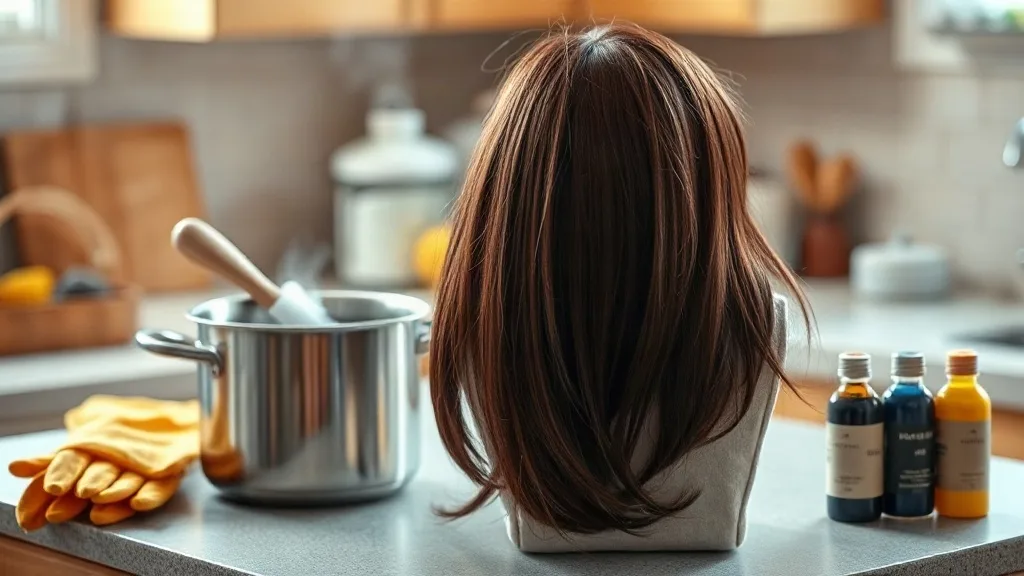
This is what I use on the majority of my garage-sale rescues. It is messy, it smells, and it will stain your pot forever, so use a thrift-store pot you do not love. Never use a pot you cook in.
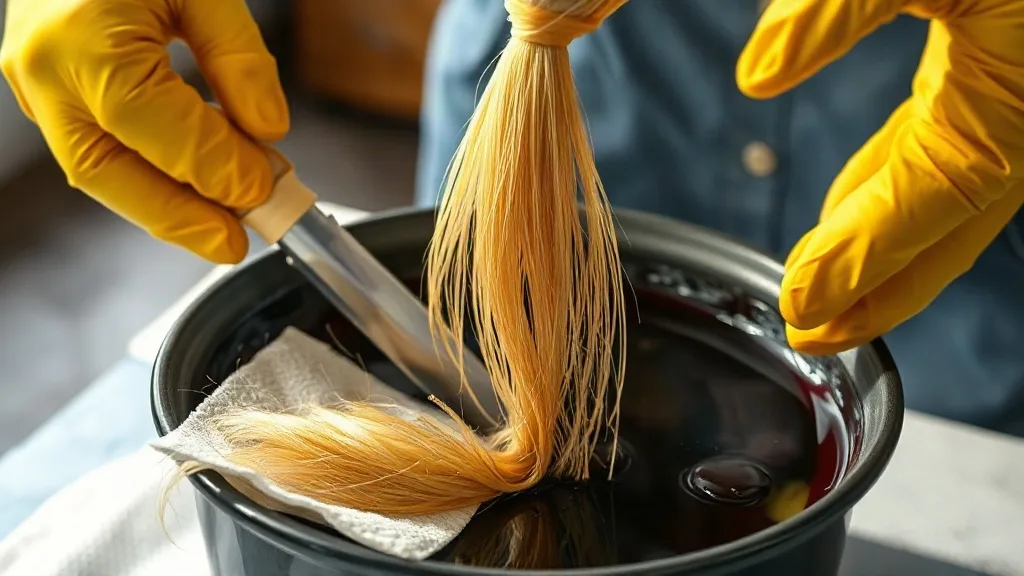
- 1. Test first. Snip a small hidden weft from the nape and dip it in the bath before you commit the whole wig. This step is non-negotiable.
- 2. Fill the pot with enough water to submerge the wig, add the dye (start with half the recommended amount), and a spoonful of dish soap or the dye carrier that comes with the kit.
- 3. Heat to 180 to 200 degrees Fahrenheit - hot, steaming, but not a rolling boil. Stir constantly so the fiber never rests against the bottom of the pot.
- 4. Submerge the wig and keep it moving for 10 to 30 minutes. Check the color every five minutes by lifting a strand, because disperse dyes keep developing.
- 5. Pull it early. Dyed synthetic always looks darker wet than dry, and it will not lighten back once it is overdone.
- 6. Rinse in gradually cooler water until the water runs clear. This can take a while. Then soak in cool water with a capful of fabric softener for ten minutes to restore slip.
- 7. Air dry on a wig stand or a clean towel, never in a hot dryer, and do not brush it while wet.
A note on temperature: some fibers, especially cheaper modacrylic, start to frizz and stiffen above 180 degrees. If you are nervous about the wig, go lower and longer. A gentle 160 degrees for 45 minutes is far kinder than 200 degrees for 15, and often gives a more even result.
Alcohol Ink and Markers: The Precision Tool
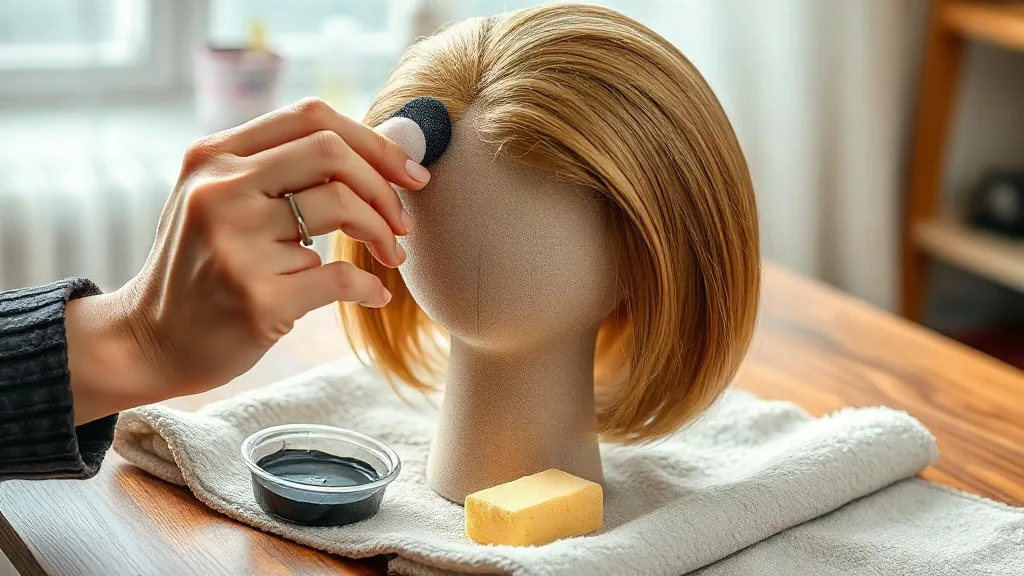
For roots, part lines, and the little regrowth zone at the front of a lace front, alcohol ink is unbeatable. Copic markers and loose alcohol ink applied with a small brush or a sponge dauber blend into the fiber and dry almost instantly. Sharpies work in a pinch for tiny spots, but they can read purple in daylight and may transfer to your fingers when it is humid.
Work in thin layers, feather outward, and do not saturate. Alcohol ink on damp fiber wicks and spreads fast, and once it spreads into a lighter section you cannot pull it back out.
The Fabric Paint Root Smudge
This is the trick that has saved more wigs for me than any dye bath. Most secondhand wigs look off not because the color is wrong, but because the color is perfectly uniform from root to tip, like a plastic doll's hair. A soft root smudge makes a wig look like it grew out of a human head.
Mix acrylic paint with fabric medium, roughly one part paint to two parts medium, then stipple it along the part and the hairline with a sponge. No heat, no rinsing, and it lasts until you wash it out. Test on the inside of the cap first to make sure it does not stain through, and keep your strokes light and irregular - a hard line looks like a grown-out dye job, not a natural root.
Toning Down Brass, Orange, and Yellow
If your wig is too warm - yellowy blondes, orange browns, brassy reds - you can shift the tone without changing the depth. A very dilute bath of disperse dye in a cool shade (pearl gray or graphite for blondes, a drop of navy for yellow tones, a touch of dark brown for orange reds) for three to eight minutes at low heat can neutralize warmth surprisingly well.
Purple shampoo made for human hair will not do much here, because it is designed to interact with protein. A drop of violet alcohol ink diluted in water and misted lightly over the fiber can knock back yellow in a pinch, but go slowly. You are toning, not dyeing.
What You Can Never Do: Go Lighter
I want to be blunt here, because this is where people ruin wigs. You cannot lighten synthetic hair at home. There is no bleach, no developer, no magic soak, no overnight trick. The pigment is inside the plastic. Every enthusiastic video about lightening a synthetic wig with peroxide ends the same way: a stiff, matted wig that is the same color, only worse.
If you need lighter hair, your money is better spent on a different wig. Which is honestly fine. That is what the bargain bins are for.
Always Test, Always Sacrifice a Weft
The nape weft is your friend. Cut a two-inch piece from a spot nobody will ever see, tie it with a twist tie, and run it through whatever process you are planning. Does it take color at all? Does it go stiff? Does it frizz? Does it smell like burning plastic? Fifteen minutes of testing saves you a whole wig, and on a $6 wig the test strand is basically free.
Aftercare for a Freshly Dyed Synthetic
- Wait 24 hours before wearing it, and rinse it again right before that first wear.
- Wear dark clothing and use a dark pillowcase for the first several wears. Dye bleed is real.
- Wash rarely, in cool water, with a gentle synthetic wig shampoo. Every wash fades a homemade dye job.
- Condition with a synthetic-safe conditioner or a diluted fabric softener soak. Never use human-hair deep conditioner.
- Skip heat tools. If you absolutely must, use the lowest setting and test on an inner weft first.
- Store on a stand or in a silk bag. Friction is what dulls and fades synthetic fiber fastest.
When Dyeing Is Not Worth It
Do the math the thrifty way. If the wig cost $8, the dye costs $8, and you spend three hours on a process with maybe a 60 percent success rate, you are not saving money. You are gambling. Dyeing is worth it when the wig fits beautifully, the cap is comfortable, and the cut flatters your face. It is not worth it for a scratchy wig on a bad cap that you are dyeing only because it was cheap and you feel guilty throwing it out.
One more thrifty tip: if this is your first time, buy a $3 ugly wig specifically to practice on. Garage sales and thrift stores are full of them, and a sacrificial wig is the cheapest education in wig customization there is.
Quick Answers
- Can I use regular hair dye on a synthetic wig? No. It will not lift, it will not deposit evenly, and the developer can damage the fiber.
- Can I lighten a synthetic wig? No, not reliably at home. Treat lightening as off the table.
- What dye works best? Disperse dyes made for synthetics, such as Rit DyeMore or Jacquard iDye Poly, used hot but never boiling.
- Will dyed synthetic hair bleed? Often, especially in the first few wears. Rinse thoroughly and expect some transfer onto light fabrics.
- Can I dye just the roots? Yes. Alcohol ink or acrylic paint mixed with fabric medium is the safest approach.
- Can I dye a heat-friendly wig? Sometimes, with extra caution. HD fiber tolerates more heat, but it is still plastic and still easy to over-process.
Final Thoughts
Coloring a synthetic wig is less like dyeing hair and more like dyeing a synthetic shirt. Some fibers take dye beautifully, some shrug it off entirely, and heat is the thing that decides whether you get a result or a disaster. Stick to disperse dyes, stay darker rather than lighter, always test a hidden weft, and treat lightening as impossible. Do that, and the $6 wig with the tragic orange tint at the bottom of the rummage bin might just become the best thing in your collection. That, right there, is the treasure hunt.