

I've been in the wig business long enough to know a few secrets. On set, we have to make sure every strand behaves perfectly under the lights. And you know what? The same simple routine that keeps movie-star wigs camera-ready can work for your everyday synthetic wig too. No need for fancy products or hours of styling. Just a few easy steps that will keep your wig looking like it just came out of the box.
Why Synthetic Wigs Need Special Care
Synthetic fibers are not like human hair. They have a 'memory' that holds their style, but they're also more delicate. Heat is their enemy—too hot and you'll get frizz or even melt the fibers. And because they're man-made, they don't produce natural oils. That means they need a different kind of TLC. But once you learn the basics, it's a breeze.
The Simple Routine: Five Steps
- Brush gently before and after wearing
- Wash with cold water and synthetic wig shampoo
- Condition with synthetic conditioner
- Air dry on a wig stand
- Store properly
Step 1: Detangling the Right Way
Start with a wide-tooth comb or a special wig brush designed for synthetics. Never brush a synthetic wig when it's wet unless the manufacturer says so—wet fibers are weaker and can snap. Work from the ends upward, gently teasing out tangles. On set, we always do this before the wig goes on. It saves so much time and prevents breakage.
Step 2: Washing Without Frizz
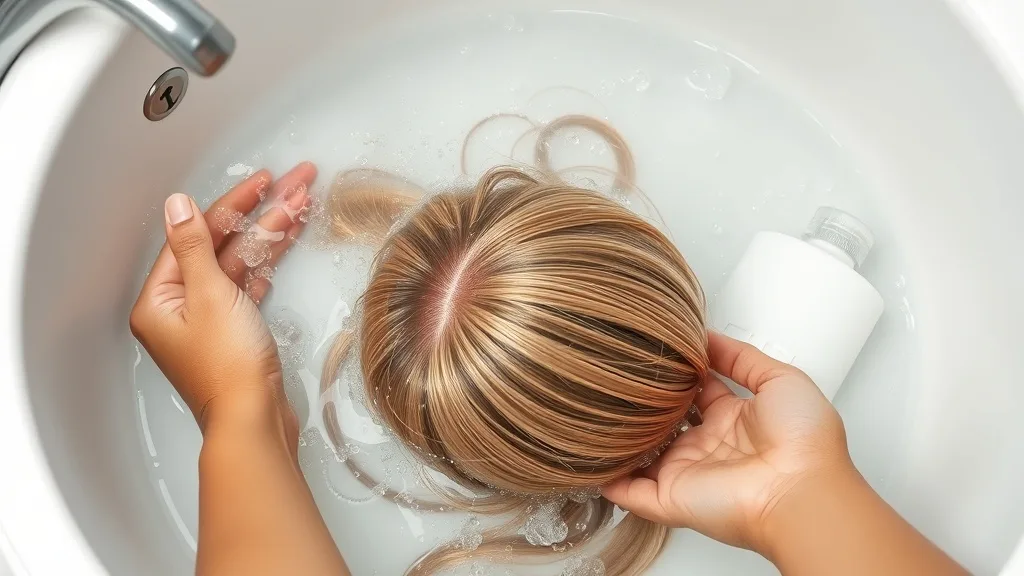
Fill a basin with cold water and add a small amount of synthetic wig shampoo. Submerge the wig and gently swish it. Don't rub or wring—that causes frizz. Let it soak for about 5 minutes, then rinse with cool water until the suds are gone. I once saw an actress lose it because her wig went frizzy after a wash. That's when I learned to always use cold water.
Step 3: Conditioning for Shine
Use a conditioner made for synthetic wigs. Apply it from mid-length to ends, avoid the roots where the wig cap is. Let it sit for 2 minutes, then rinse with cold water. This restores the fiber's natural shine and reduces static. Heavy oils can weigh down synthetic hair, so stick to lightweight products.
Step 4: Drying and Styling
Pat the wig with a towel—never rub—then place it on a wig stand to air dry. Avoid direct sunlight and heat sources. If your wig is heat-friendly, you can use a low setting on a curling iron, but always test a small strand first. For most synthetics, the style is already set, so just shake it out and let it dry naturally.
Step 5: Storage and Longevity
Always store your wig on a foam head or a wig stand to maintain its shape. Keep it away from direct sunlight and dust. If you wear it every day, give it a one-day break each week to let the fibers relax. Rotating between two wigs will double their lifespan—trust me, I've done this for years on film sets.
What NOT to Do: Common Mistakes
- Never use hot tools unless the wig is specifically labeled heat-friendly
- Don't use regular shampoo—it has sulfates that wreck synthetic fibers
- Avoid brushing when wet unless the instructions say it's okay
- Don't sleep in your wig—it causes tangling and reduces the life
I remember one time on a big-budget movie, a young actress slept in her wig because she was too tired to take it off. The next morning, it looked like a bird's nest. We had to replace it. So learn from that mistake: take the extra two minutes to care for your wig, and it will repay you with months of beautiful wear.
That's it. A simple routine that makes all the difference. Whether you're a diva on set or just want to look fabulous for your daily life, these steps keep your synthetic wig in top form. And if anyone asks where you got your hair, you can just smile and say, 'It's a secret.'