

The Mythical Origin of the Dominant Side Secret
Many moons ago, when I was but a young wig detangler with a flask of unicorn tears (it's actually just argan oil, but the legend sells itself), I found myself wrestling a yeti in the back of a wig shop. Amidst the fur and the fitting caps, I realized something profound: most people measure their heads as if they're perfectly symmetrical, but they're not. Your dominant side—the side you favor for writing, waving, or wrestling yetis—holds the key to a perfect wig fit.
Since that day, I've been on a quest to spread the word. Whether you're right-handed or left-handed, your dominant side often has slightly denser hair, a more pronounced muscle tone, and even a subtle asymmetry in your skull shape. Ignoring this can lead to wigs that shift, gap, or simply feel wrong. But fear not! With my secret measuring techniques—honed through centuries (okay, years) of experience—you'll achieve a fit that feels as natural as your own hair.
Why Your Dominant Side Matters
Think about it: you use your dominant hand more. That means the muscles and bones on that side are slightly different. Most people have a dominant ear that sticks out a tad more, or a temple that's a fraction wider. These millimetric differences can make or break a wig's security. By measuring with your dominant side in mind, you account for these natural asymmetries.
For example, if you're right-handed, your right temple might be slightly fuller. A standard measurement from ear to ear across the top might be off by a quarter inch. That's enough to cause a wig to tilt or lift when you move. The solution? Measure twice—once for each side—and use the larger measurement for a snug yet comfortable fit.
Step-by-Step Measuring Guide
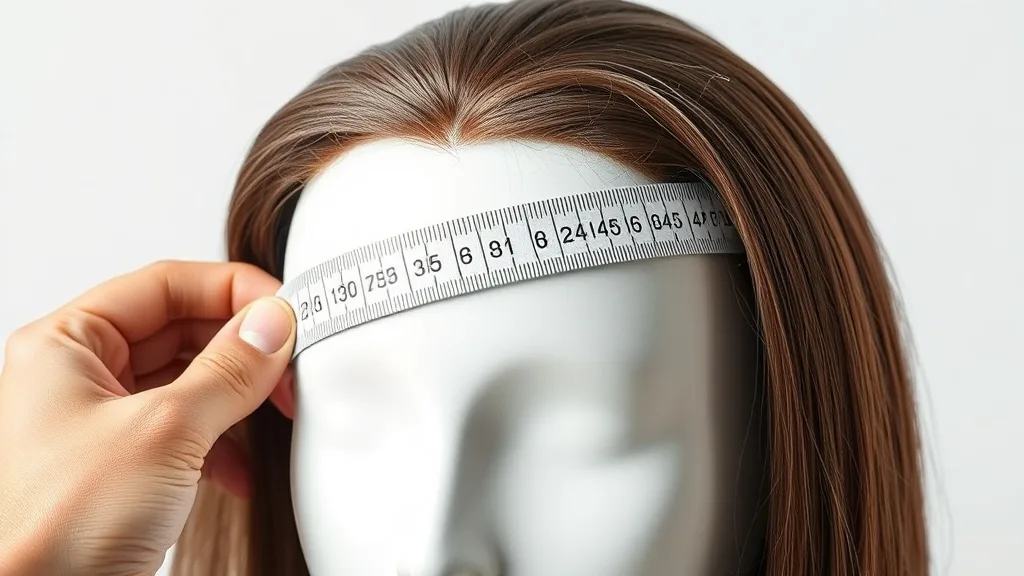
Ready to measure like a myth? Follow these steps, and your wig will stay put even in a hurricane (or a yeti hug).
Pro tip from the unicorn tear archives: if you're between sizes, always size up. You can always pad a wig, but you can't stretch it (without a mountain of tears).
Common Mistakes and How to Avoid Them
- Measuring only once: Always measure twice, and include dominant side variations.
- Using a metal tape: Use a flexible cloth tape. Metal won't conform to your head's curves.
- Ignoring your hair: If you have hair, flatten it with a wig cap before measuring. Otherwise, your wig might be loose.
- Forgetting the nape: The dominant side nape can be lower. Mark the hairline on your neck with a washable marker to get accurate length.
But the most common mistake? Not trusting the process. I once had a client who insisted her left side was the same as her right. When I measured, her left temple was a full half-inch wider. She said, 'That can't be.' I said, 'Neither can yetis, but here we are.' We used the larger measurement, and her wig fit like a dream.
My Secret Serum for Wig Security
While measuring is paramount, a drop of my 'unicorn tear' serum (it's argan oil, shh!) on the wig's inner straps can add grip without damaging the lace. But even without it, accurate measuring is your shield against wig mishaps. Remember: a well-measured wig doesn't need glue—it needs respect for your dominant side.
Now go forth and measure like a legend. Your perfect fit awaits.