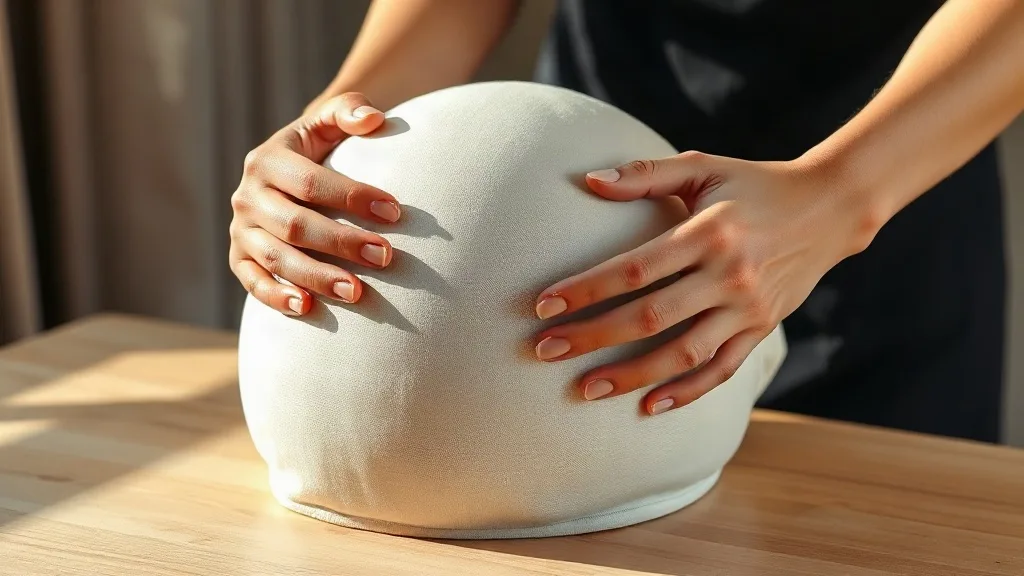



Ask a longtime wig wearer what makes a wig comfortable and you'll hear the same answers: lace fronts, hand-tied caps, mono tops, density, hair origin, cap size. Almost nobody mentions the wig cap — that thin, stretchy layer you pull on before the wig itself. It costs less than a coffee, gets tossed in a drawer without a second thought, and is quietly responsible for the difference between a wig you forget you're wearing at hour nine and a wig you're desperate to rip off by lunch.
If you wear wigs regularly, a wig cap isn't an accessory. It's the foundation everything else sits on. This guide breaks down what a wig cap actually does, why it often matters more than the wig you bought, and how to choose and care for one that keeps you genuinely comfortable all day — without generating a drawer full of disposable plastic.
What a Wig Cap Actually Does
A wig cap — sometimes called a wig liner or stocking cap — is a close-fitting layer worn over your natural hair and under the wig. Its job description is longer than most people assume:
- Creates a smooth, flat surface so the wig sits evenly instead of catching and shifting on your own hair
- Absorbs sweat and scalp oil before they reach the wig's cap and hair
- Reduces friction between your scalp and the wig's lining, which is what causes most irritation
- Protects natural hair — especially fragile edges and braided sections — from rubbing, pulling, and breakage
- Gives clips, combs, and adhesive something stable to grip, so anchoring works the way it should
- Adds a thin cushioning layer under lace, wefts, and hand-tied knots that would otherwise press directly on skin
Skip the cap and you're asking your wig to do all of that by itself, with a cap that was designed to hold hair, not to sit against a human scalp for ten hours. That's a lot to ask of a $500 unit — and it's why the cheapest item in your kit has the biggest say in how the day goes.
The Comfort Equation: Friction, Heat, and Pressure
Nearly every complaint about wig discomfort traces back to three physical forces. A good cap addresses all three at once.
Friction is the first. However flat you braid or wrap your hair, it still has texture and direction. Turning your head, commuting on a bus, glancing down at a phone — every small movement creates micro-abrasions between your hair, your scalp, and the wig's lining. Caps made from smooth, low-friction material let the wig glide over the surface instead of grabbing at it. Over a full day, that difference shows up as irritation or as nothing at all.
Heat and moisture are the second. Your scalp produces sweat no matter the season, and a wig traps it. In that sealed environment, moisture has only two places to go: into your wig's cap and hair, or into the liner. A breathable cap wicks sweat away and lets it evaporate gradually. A non-breathing cap holds it against your skin, and within an hour you get that clammy, sliding feeling that makes you want to scratch through the lace.
Pressure is the third and the most underestimated. Lace fronts, clips, and adhesive edges all concentrate force at a handful of points along the hairline and crown. A cap with a soft, wide band spreads that load across a broader area instead of pinching a single line across your forehead. If you've ever taken a wig off at 6 p.m. and found red marks that lasted an hour, you've met the pressure problem — and a better band is usually the fix.
Wig Cap Materials, Compared
Material choice is where comfort is genuinely won or lost. Here's how the common options stack up.
- Nylon mesh (stocking style): Ultra-light and extremely smooth, nearly invisible under a wig. But it doesn't breathe, it traps heat, and it's petroleum-derived and essentially non-biodegradable. It also sheds microfibers every time you wash it.
- Nylon stretch with a wide band: The default for good reason — durable, holds hair flat, and stays put. Same ecological drawbacks as mesh, and stiff bands can create pressure marks.
- Cotton jersey: Breathable, absorbs sweat well, and feels gentle on sensitive scalps. Slightly bulkier under very snug wigs, but a strong everyday choice.
- Bamboo viscose and bamboo blends: Soft, breathable, naturally moisture-wicking, and made from a fast-growing crop. Biodegradability depends on the processing, but it's a clear step up from virgin nylon — and it feels cool against the skin.
- Silk: Temperature-regulating, low-friction, and gentle on fine hair and reactive scalps. Pricier and more delicate to launder, but it lasts when cared for.
- Open-weave mesh dome: The most breathable option, ideal for hot climates, gym days, and thick hair worn in braids. Less smoothing, so it works best under wigs with their own solid cap construction.
- Velvet or silicone comfort bands: Not a full cap so much as a grip-and-cushion band at the hairline. Excellent for reducing slippage on active days, though some people find silicone irritating with repeated wear.
For most people, a breathable natural-fiber cap under a well-fitted wig outperforms a cheap nylon cap every single time — especially in summer, in heated offices, or anywhere you're moving around. If you only change one thing this month, make it this.
Why the Cap Sometimes Matters More Than the Wig
Wig construction gets all the attention because it's the expensive, visible part. But comfort is a system: the wig's cap, your head shape, your own hair, and the liner between them. A beautifully made lace front on a slippery nylon liner that bunches at the crown will still feel worse than a mid-range wig on a smooth bamboo cap that fits your head properly.
There's a hygiene argument too. Every hour you wear a wig, your scalp produces oil and sweat. A liner absorbs most of it and gets washed after one or two wears. Your wig's own cap absorbs far less, which means the hair stays cleaner, smells fresher, and needs washing less often. Less washing means less manipulation of the hair, slower wear on the lace and knots, and a longer life for an item that took considerable resources to make. The cap isn't just protecting your scalp — it's protecting your investment.
Choosing the Right Wig Cap for Your Scalp and Lifestyle
There's no single best cap — only the best cap for your situation. Match it to how and where you'll be wearing it.
- Hot climate, workouts, or long commutes: Open-weave bamboo or mesh with a thin band, and carry a spare to swap halfway through the day.
- Sensitive or reactive scalp: Undyed cotton or bamboo, no silicone band, and a fragrance-free, dye-free detergent when you wash it.
- Fine or thinning natural hair: A satin-lined or silk cap that reduces friction on fragile strands and won't tug at the hairline.
- Thick or long natural hair worn in braids: A wide-band stretch cap or mesh dome that covers volume without compressing it into an uneven lump.
- Lace front wearers: A thin, edge-friendly cap that adds no bulk at the hairline. Many people leave a small margin bare so the lace can sit directly against skin.
- Full glue-down installs: An ultra-thin cap, or none at the hairline at all, paired with a scalp protector. Bulky liners fight the adhesive.
- All-day office wear: Breathable cotton or bamboo with a seamless band, which is the combination least likely to leave pressure marks by 5 p.m.
How to Put On a Wig Cap So You Forget It's There
Placement matters as much as material. A cap that's twisted, bunched, or pulled too low will telegraph straight through the wig and turn into a headache by mid-afternoon.
- Start with a clean, completely dry scalp. Damp skin under a cap is a recipe for itching and odor.
- Braid, twist, or wrap long hair flat and close to the head. Lumps under a cap become lumps under a wig.
- Stretch the cap wide with both hands before placing it, so it doesn't drag at your hairline as it settles.
- Set the band at your natural hairline rather than your forehead. Sitting too low is one of the most common causes of tension headaches.
- Tuck every loose strand under the cap, working from the crown outward, so nothing pokes through at the nape.
- Smooth the surface with flat palms. Run your fingers over the whole cap and press out any ridges or folds.
- Let it settle for a minute, and check in a mirror for pressure points or tight spots before you put the wig on.
- Recheck after an hour of wear the first few times. If you feel a specific pinch point, the fix is usually the band, not the wig.
Common Wig Cap Mistakes That Cause Discomfort
- Wearing a cap that's too tight. Constant tension causes headaches, marks, and traction damage along the hairline over time.
- Reusing the same sweaty cap day after day. Oil and bacteria build up fast, and so does the smell.
- Putting a cap on over damp hair or a damp scalp. It never fully dries underneath, and the wig will slide.
- Using a non-breathing nylon cap in a hot climate and blaming the wig for the heat.
- Layering two caps for 'security.' It doubles heat and pressure and rarely adds any real hold.
- Ignoring the band. A stiff or narrow band is a pressure point, and no amount of wig adjustment will fix it.
- Treating caps as disposable. Cheap caps that pill, stretch out, and shed fibers cost more over a year than three good ones.
The Sustainable Case for a Better Wig Cap
Here's the part that rarely makes it into wig guides. Conventional wig caps are almost always made from virgin nylon or polyester — petroleum-derived, effectively non-biodegradable, and prone to shedding microfibers with every wash. They're cheap enough that most people treat them as disposable, which is exactly the problem. A cap worn a handful of times and thrown away is a plastic item with a lifespan measured in days.
The swap is small but the math is not. If you wear wigs five days a week and go through a nylon cap every couple of weeks, that's roughly two dozen disposable caps a year. Moving to four well-made reusable caps in bamboo viscose, organic cotton, or a recycled-fiber blend — and rotating them so each one dries fully between wears — can cut that to nearly zero. You're also buying something that feels better against the skin, which makes the change easy to keep.
There's a second-order benefit that matters just as much: a good liner keeps oil and sweat out of the wig itself, which means you wash the wig less often. Less frequent washing saves water and detergent, reduces fiber shedding into your drain, and slows the wear on lace and knots. Every time you put on a reusable cap, you're putting off the day you need to replace a wig — and that is the single largest environmental decision in wig ownership.
Caring for Your Wig Cap
- Hand wash in cool water with a gentle, fragrance-free soap. Hot water kills elastic and degrades bamboo and silk fibers.
- Never wring or twist. Press the cap between two towels to remove water instead.
- Air dry flat or over a cap form or mug, away from radiators and direct sun. Elastic dries faster than fabric and hates heat.
- Rotate between at least two or three caps so each one dries completely before its next wear.
- Replace a cap when the elastic goes slack, the band loses its shape, the fabric pills or thins at the crown, or a smell lingers after washing.
- Keep one spare in your bag. A mid-day swap in hot weather is the easiest comfort upgrade there is.
When to Replace a Wig Cap
Elastic loses memory gradually, so the decline is easy to miss. The clearest signals are a band that leaves marks within twenty minutes, a cap that slides up the back of your head, thinning fabric at the crown, or a faint smell that survives a proper wash. With rotation and hand washing, a well-made natural-fiber cap typically lasts three to six months of regular wear. Indefinitely stretched nylon caps usually give up much sooner — and they're the ones shedding fibers the whole time.
The Bottom Line
If your wig is uncomfortable by hour three, don't blame the wig yet. Look at the layer directly underneath it. Friction, heat, moisture, and pressure are what turn a good wig into a daily endurance test, and a wig cap is the only component designed to manage all four. Get the material right, get the fit right, wash it often, and replace it when the elastic gives up — and you'll get more comfort out of a few dollars a month than you will out of any upgrade to the wig itself.
Comfort is a system, and the cheapest part of it is doing the most work. Treat your cap like the piece of equipment it is, and the rest of the system will follow.